Every property owner knows the horror of finding rotten wood or mold sprawling across their drywall, even when the roof looks perfectly fine. This happens because water often seeps into commercial and residential structures completely unseen. On top of the staining, these hidden leaks sag your ceilings, short out your electrical wiring, and tank your property’s resale value.
But you don’t have to worry anymore, as there is a one-stop solution to all these problems: roof flashing! It involves using metal barriers to stop a minor leak from your chimneys and vents from becoming a five-figure repair bill. So, instead of letting that flooded attic teach you a lesson, you should go ahead and read this guide to gain more knowledge about the different types and benefits of this roofing method!
At a Glance: How Roof Flashing Protects Your HomeRoof flashing is an important part of the roof protection system, especially where there are intersections of the roof sections and where there are penetrations through the roof. If properly implemented, flashing helps in the efficient diversion of rainwater from the vulnerable sections. This guide provides Knowledge of the types of this process, the materials used in it, and the advantages it offers, helping property owners maintain a robust roof and prevent damage that leads to high bills. |
What Is Roof Flashing?
In essence, roof flashing is a water-resistant material that is put in place to regulate water flow at every intersection on your roofing surface. If you’ve heard that shingles alone are enough to weatherproof a roof, let us do our part in debunking such roofing myths. Wherever the roofing surface terminates or changes direction, the shingles will always leave exposed areas where water can penetrate. Flashing acts as a sealant for these areas. It is usually sold in layered rolls or strips.
What are the materials used in roof flashing?
- Galvanized Steel & Aluminum: The reliable, rust-resistant standards for most homes.
- Copper & Zinc: Premium “lifetime” metals lasting 50+ years.
- Lead & Rubber: Best for custom shaping around chimneys and pipes.
- PVC & Felt: Budget-friendly or backup layers for basic protection.
What are the Different Types of Roof Flashing?
Step Flashing
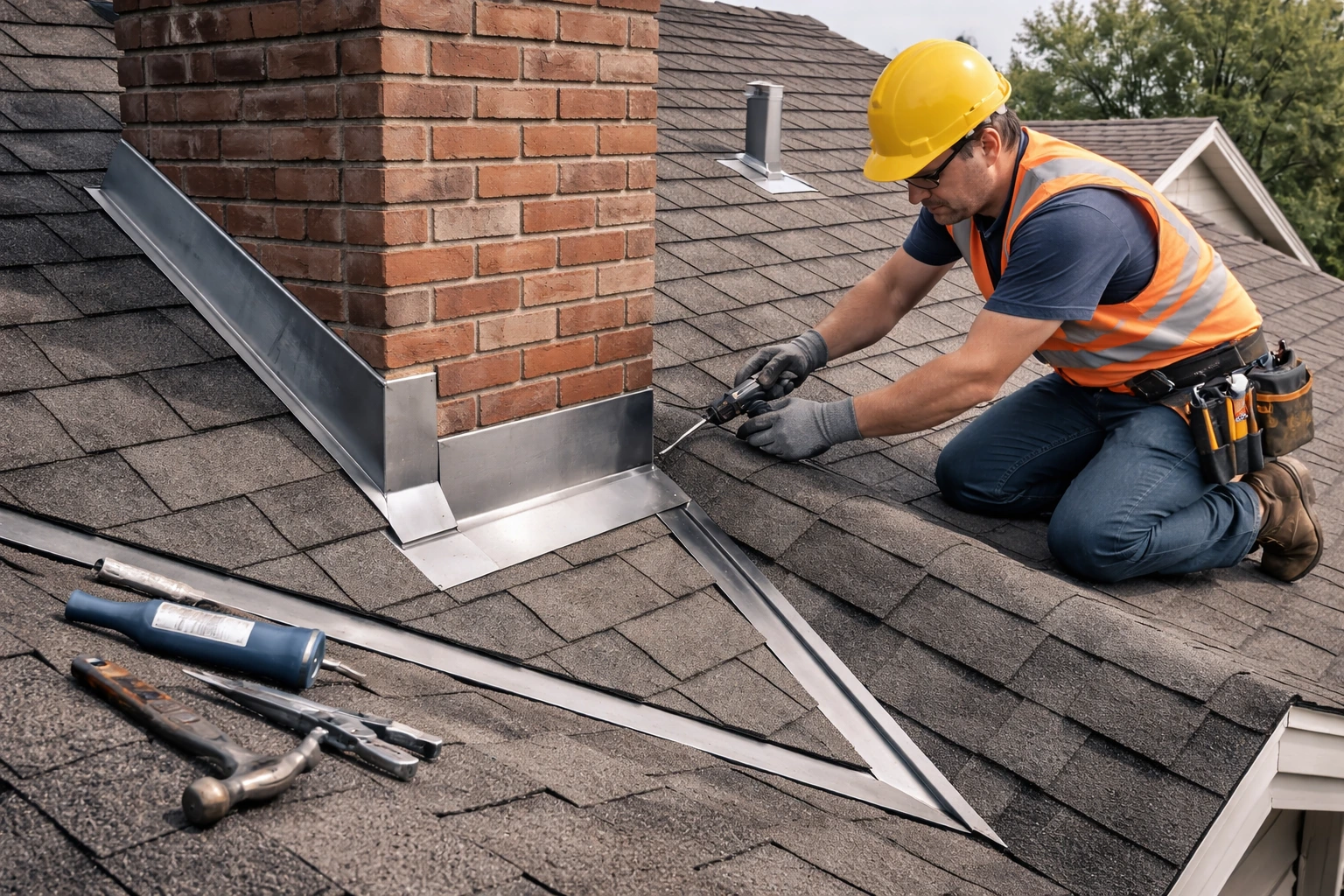
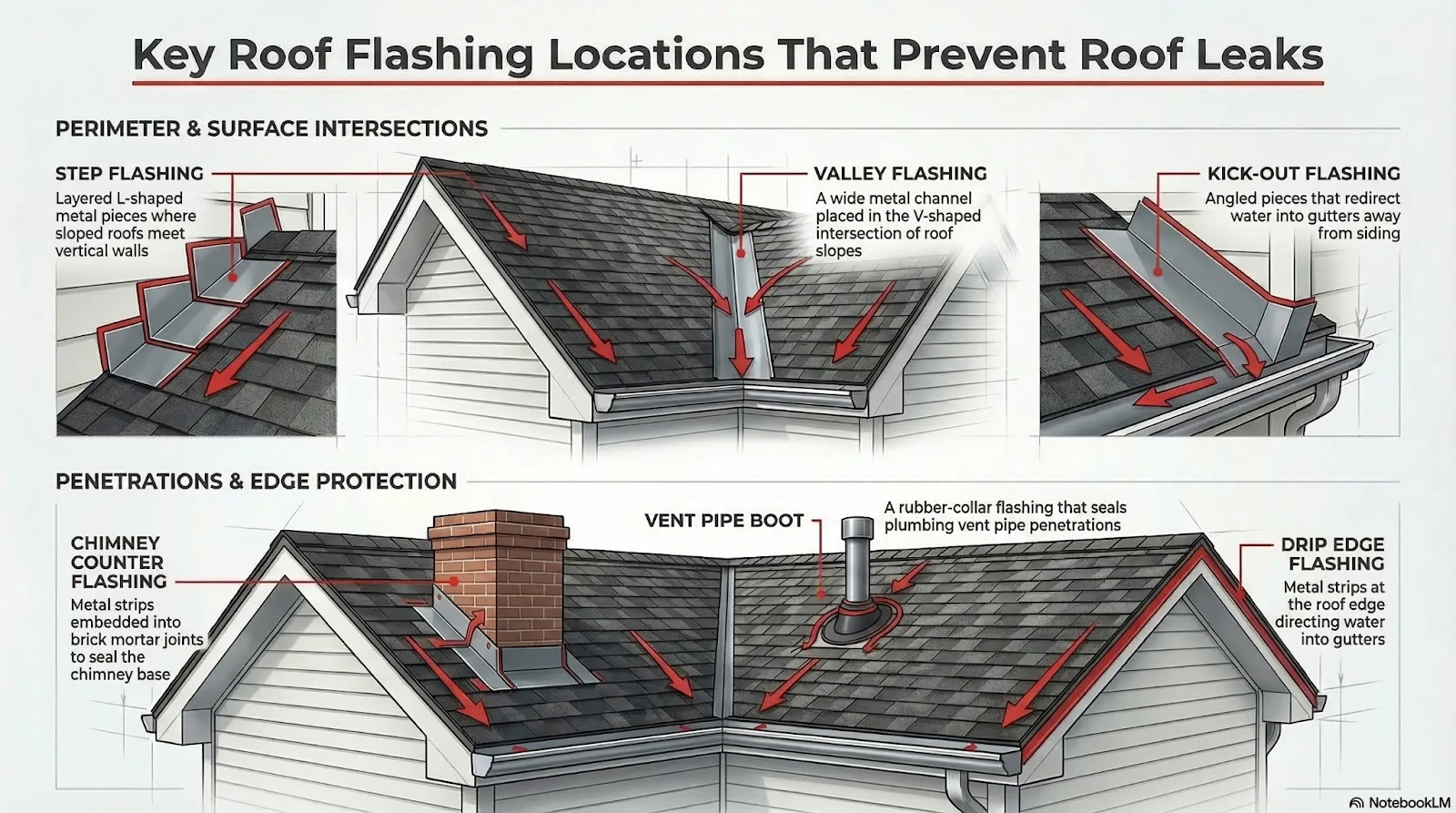
Anywhere you see a sloping roof meet a vertical wall, like the side of a chimney or a dormer, you will find step flashing at work. Rather than one long piece, it is small L-shaped metal shingles, one of which is inserted under one row of material as the roofer climbs up the roof. Thus, it acts as a step-like staircase where the water is constantly in motion, running down each piece and going away from the wall.
Valley Flashing
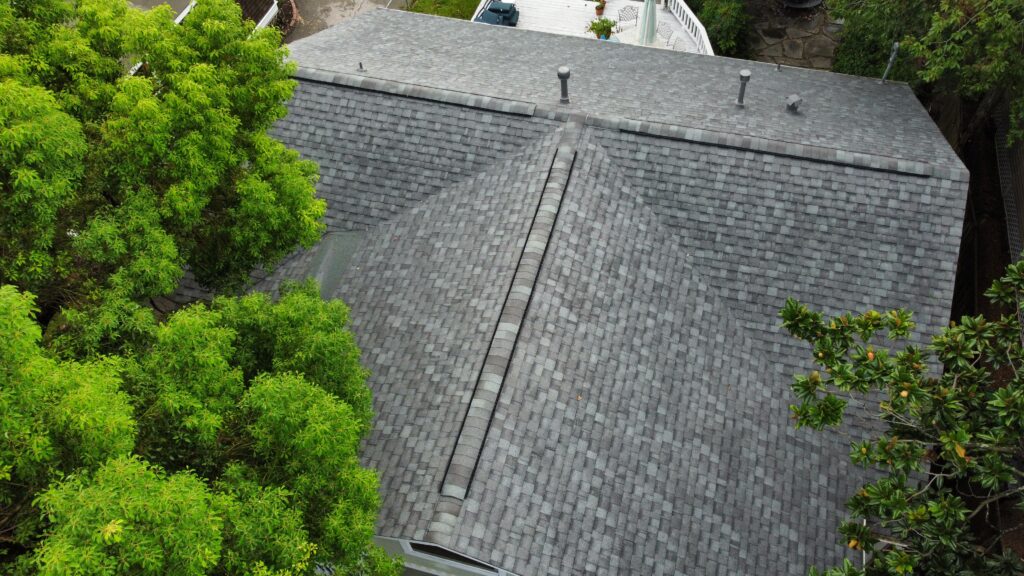
A valley is the V-shaped channel where two roof slopes meet, and during any decent rainstorm, it carries more water than almost any other part of the roof. To handle that, roofers install a wide W-shaped metal channel right in the crease. The raised ridge running down the center is the key detail. When water rushes down one slope and hits the valley at speed, that ridge stops it from shooting across and sneaking under the shingles on the other side.
Drip Edge Flashing
You’ll find drip edges installed along the very perimeter of your roof, specifically at the eaves and rakes. This L-shaped metal strip acts like a tiny diving board for rain. It ensures that water actually falls off the roof and directly into the gutter. Without a drip edge, surface tension causes water to “wick” backward, which is the #1 cause of rot in the wooden fascia boards behind your gutters.
Chimney and Counter Flashing
Sealing a brick chimney is actually a two-part team effort. While step flashing handles the layers at the bottom, counter flashing is the finishing touch that locks everything down. This piece is tucked directly into the brick’s mortar joints and folded over the top of the step roof flashing. It creates a watertight “sandwich” that ensures rain can’t sneak behind the metal, even if the chimney’s mortar starts to age or crack.
Vent Pipe Boots
Every roof has plumbing stacks or exhaust vents poking through it, creating a natural hole in your armor. To seal these, we use “boots”, that is, specialized metal squares with a thick, flexible rubber collar in the center. The collar grips the pipe tightly like a gasket, which stops rain from trickling down the pipe and straight into your attic or ceiling.
Apron (Continuous) Flashing
Apron flashing is used at “headwalls,” which are the spots where a sloped roof ends against a flat vertical wall. Unlike the small pieces used for step flashing, this is a long, solid strip of metal. It hangs over the top of the shingles like a protective apron, blocking wind-driven rain from being pushed behind the siding or trim where the roof meets the house.
Kick-Out Flashing
This is a small but absolute lifesaver found at the bottom corner where a roof edge meets a side wall. It has a unique “bridge” shape that literally kicks water away from the siding and directly into the gutter. Without this tiny component, water tends to run down the exterior wall, which is the leading cause of hidden, expensive structural rot behind your siding.
Skylight Flashing
Because skylights are essentially giant holes in your roof, they need their own custom protection. Most units come with specialized metal frames designed specifically for that window model. These wrap around the entire unit to ensure water can’t pool against the glass frame, successfully directing all runoff away from your living room.
Why Roof Flashing is the MVP of Your Roof?
Extreme Weather Protection
Heavy storms can push rain and snow into tiny gaps between shingles. Among other roof repair solutions, flashing is the most effective way to block these crevices, helping them stand firm against wind-driven moisture and ice dams. Thus, it is the armor that prevents the elements from reaching your home’s structural bones.
Energy Efficiency Bonus
Gaps in your roof’s seal don’t just let water in; they let conditioned air out. By keeping your insulation dry and your joints airtight, flashing reduces the strain on your HVAC system, leading to a noticeable win for your monthly utility bills. This ties directly into why attic ventilation is crucial, alongside the seal itself.
Increasing the Home Value
Do you want to know how a well-flashed roof helps your home last longer? Well, it does so by stopping slow decay before it starts. No buyer wants to see water stains, and quality flashing ensures your property stays attractive and structurally sound by creating a watertight bridge that stops mildew from growing. This way, you are able to protect your home’s resale value.
Conclusion
Roof flashing is an unskippable part of the roofing system when you want to build a structure that lasts for a while, and it certainly doesn’t hurt to know its types and where to use them. The repercussions of ignoring it can range from simple wall peeling to serious structural damage. Thus, to avoid these, you need an experienced roofing service to handle this process. At TridentPro Construction, flashing isn’t a box we check; it’s part of how we do the job right. Whether we’re doing roof repairs or building something from scratch, our licensed team pays attention to the details that actually prevent problems down the road.
FAQs
How do I determine if my roof flashing needs repair?
Our roofing experts look for water stains on the interior walls, rusted roof flashing edges, loose metal pieces, or water leaks around chimneys, vents, or skylights.
How long does roof flashing last?
Professional installation and quality materials can make roof flashing last for 20-40 years or more.
Is roof flashing repair more cost-effective than replacing my roof?
Yes, repairing roof flashing damage with a repair service is more cost-effective than replacing a roof in the long run.
How long does a roof flashing repair service by a professional take?
A roof flashing repair service by our technicians takes only a few hours.
How often should roof flashing be inspected on a residential roof?
Schedule a roof inspection service by a professional once a year or after a major storm.