Most homeowners focus on visible roof components, such as shingles and gutters, but the hidden component of roof longevity lies in your attic’s ventilation system. Inadequate airflow in the attic can silently cause serious issues, including moisture buildup, mould growth, warped decking, and premature shingle failure. In fact, professional roofers frequently cite poor ventilation as a leading contributor to early roof failure.
Understanding how proper airflow protects your roof can help you avoid thousands in future repair costs. In this blog, we’ll break down why roof attic ventilation is essential, how it functions, and how it can significantly extend the life of your roofing system. You’ll also learn key areas for improvement for maximum efficiency and protection. Let’s get straight into it!
Proper Attic Ventilation OverviewProper attic ventilation plays a critical role in extending roof lifespan by regulating temperature, preventing moisture buildup, reducing mould growth, and protecting shingles from premature deterioration. Balanced airflow through intake and exhaust vents helps maintain structural integrity, improve energy efficiency, and prevent issues like ice dams and warped decking. Warning signs such as excess heat, condensation, and shingle damage indicate ventilation problems. Professional inspections, proper vent installation, and regular maintenance ensure long-term roof performance, safety, and cost-effective protection for homeowners. |
What Is Attic Ventilation?
Attic ventilation is the systematic circulation of air through an attic space. In modern building science, its primary job is to combat two major threats to structural integrity: trapped radiant heat and diffuse indoor moisture.
The Science: The Stack Effect
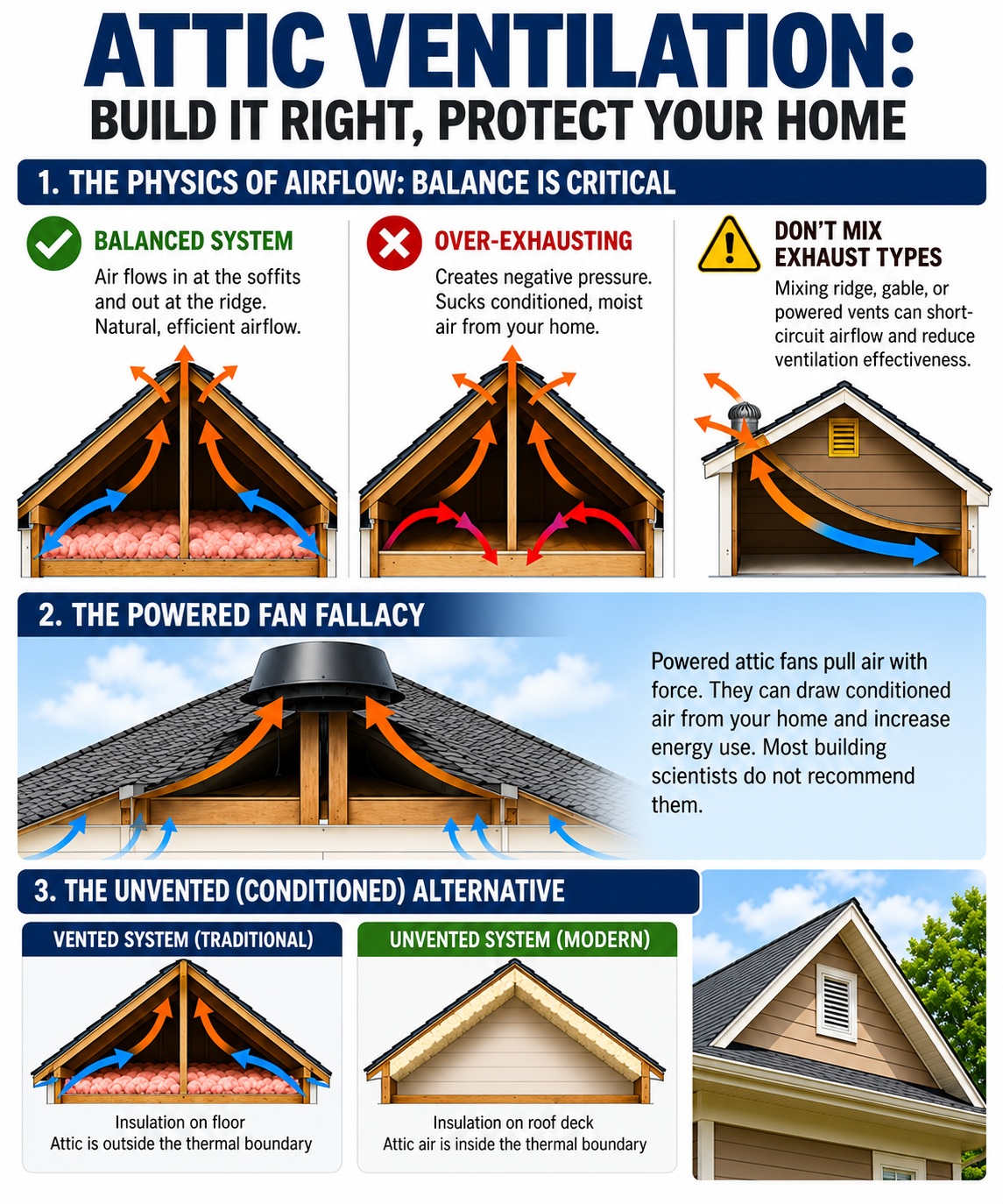
Today, ventilation relies on the stack effect (thermal buoyancy)—the principle that warm air rises and expands. When solar radiation superheats the air beneath the roof deck, it moves upward toward the peak. To manage this safely without costly mechanical intervention, modern systems utilize a strictly balanced layout:
- Intake Vents: Located at the lowest point (soffits), allowing cooler, denser outside air to enter.
- Exhaust Vents: Located at the absolute highest peak (ridge), allowing hot, humid air to escape.
As hot air exits the top, it creates a subtle negative pressure zone that draws fresh air in through the bottom, creating a self-sustaining loop.
The Short-Circuit Danger
Ensuring this loop remains uninterrupted is critical. This brings us to a major flaw in older roof designs: The Danger of “System Short-Circuiting.” To prevent this failure, modern building scientists strictly avoid mixing exhaust vent types; the old “more is better” principle has been officially debunked.
How does attic ventilation work?
This infographic visually explains the science behind effective attic ventilation and how airflow balance directly impacts roof performance, energy efficiency, and indoor comfort. Through simplified roof cross-sections and side-by-side comparisons, it highlights the difference between properly vented and poorly vented attic systems, while also illustrating why over-exhausting and mixed vent types can disrupt airflow. The final section introduces the modern unvented attic approach, showing how conditioned attic systems improve protection and thermal efficiency in certain home designs.
The Key Benefits of Proper Attic Ventilation for Your Roof’s Health
Temperature Regulation and Shingle Protection
Excessive attic heat during the summer months can reach temperatures exceeding 150°F, causing asphalt shingles to deteriorate rapidly. Proper ventilation maintains attic temperatures closer to ambient outdoor conditions, significantly extending shingle lifespan. This temperature control prevents granule loss, thermal cycling damage, and premature aging of roofing materials.
Heat buildup also affects roof decking, causing wood to expand and contract, which can lead to warping, splitting, and nail backing. Adequate airflow prevents these thermal stresses, maintaining structural integrity and preventing costly deck replacement during future roof replacement projects.
Moisture Control and Mold Prevention
Moisture infiltration is a serious threat to roof structures, especially in humid climates or during winter, when warm indoor air meets cold roof surfaces. Without proper ventilation, this can lead to condensation, mold growth, wood rot, and reduced insulation performance. A well-designed ventilation system prevents these issues by continuously removing excess humidity and promoting air circulation.
Ice Dam Prevention
Ice dams form when inadequate ventilation allows heat to escape through the roof surface, melting snow that refreezes at the roof edge. These ice formations can cause significant water damage by forcing melted water under shingles and into the building envelope.
Proper roof attic ventilation maintains consistent roof surface temperatures, preventing the freeze-thaw cycles that create ice dams. This protection is particularly crucial in northern climates where ice dam damage represents a major roofing concern.
Energy Efficiency Optimization
Effective attic ventilation is essential for optimizing energy efficiency year-round. In summer, it reduces heat buildup in the attic, limiting thermal transfer to conditioned spaces and decreasing air conditioning loads by up to 10% during peak periods. In winter, it helps regulate attic temperatures and prevents the escape of warm air through the roof, preserving insulation performance and reducing heating demand. This balanced approach not only improves indoor comfort and lowers energy consumption but also safeguards the longevity and structural integrity of the roofing system.
Improve your home’s energy efficiency with expert attic ventilation and roofing solutions designed for Houston’s climate. |
Common Signs of Poor Attic Ventilation
Interior Warning Signs
Elevated indoor humidity levels often indicate inadequate roof attic ventilation, particularly when combined with visible condensation on windows or walls. Homeowners may notice musty odors, particularly on upper floors or in areas directly below the attic.
Temperature inconsistencies between floors can signal ventilation problems, with upper levels remaining uncomfortably warm despite adequate air conditioning. These symptoms suggest trapped heat in the attic, affecting the living areas below.
Attic-Specific Indicators
Signs of poor attic ventilation often appear within the attic space itself. Visible moisture, frost buildup, or water stains on wood surfaces clearly signal insufficient airflow. Damp, compressed, or discolored insulation indicates persistent moisture issues that require immediate corrective action.
Additionally, rust on metal fasteners, brackets, or electrical components indicates prolonged exposure to high humidity, a condition that can jeopardize both structural integrity and electrical safety if not promptly addressed.
Roof Surface Symptoms
On the exterior, roof ventilation issues often reveal themselves through irregular snow melt patterns, highlighting inconsistent attic temperatures. The presence of ice dams along roof edges is a definitive warning sign and should prompt a professional inspection. Premature shingle wear, such as curling, cracking, or excessive granule loss, can also result from poor ventilation, as repeated thermal cycling accelerates material degradation and shortens the roofing system’s lifespan.
How to Improve Attic Ventilation
Professional Assessment and Planning
Effective ventilation improvement begins with a comprehensive attic evaluation by qualified roofing professionals. This assessment identifies current ventilation capacity, airflow patterns, and specific deficiencies requiring correction.
Professional calculations determine appropriate vent placement, sizing, and types based on attic configuration, roof design, and local climate conditions. This scientific approach ensures optimal performance while maintaining architectural integrity.
Intake Ventilation Enhancement
Soffit vent installation or upgrade provides essential intake airflow at the roof perimeter. These vents should remain unobstructed by insulation or debris to maintain proper air circulation throughout the attic space.
Continuous soffit vents offer superior performance compared to individual vent units, providing consistent airflow along the entire roof edge. Professional installation ensures proper sizing and placement for maximum effectiveness.
Exhaust Ventilation Solutions
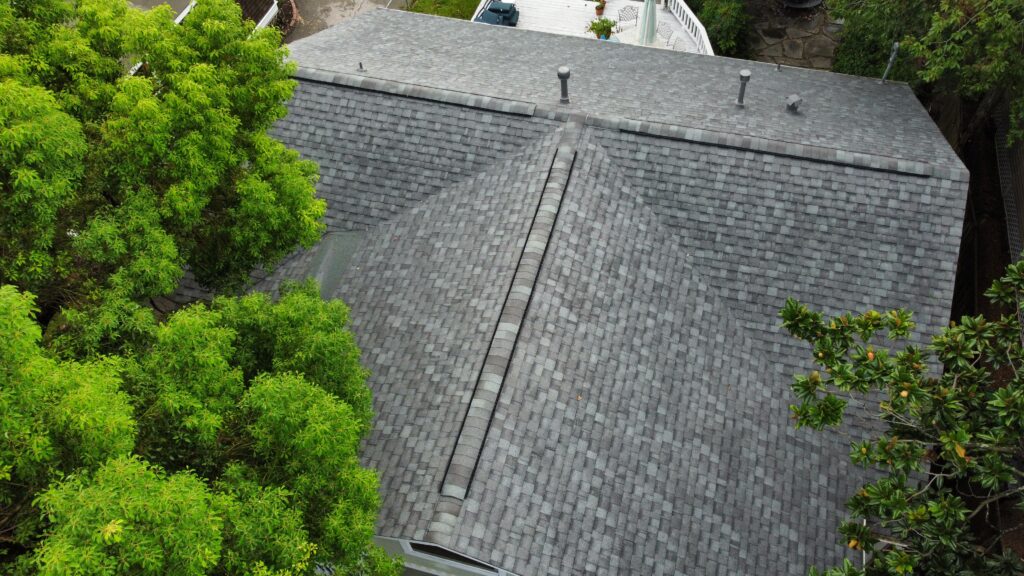
Ridge vent installation creates continuous exhaust along the roof peak, working in conjunction with soffit vents to establish optimal airflow patterns. These vents integrate seamlessly with most roofing systems while providing superior performance.
Powered exhaust fans may be necessary in certain configurations where natural ventilation proves insufficient. These systems require proper electrical connections and must be integrated carefully to avoid interference with existing roof materials, particularly during upgrades such as asphalt shingle repair.
Maintenance and Optimization
Regular inspection and maintenance preserve the roof ventilation system’s effectiveness over time. This includes clearing debris from vents, checking for insulation blockages, and ensuring proper airflow throughout the system.
Professional maintenance programs identify potential problems before they cause significant damage, protecting both ventilation systems and roof structures through proactive care. The importance of regular roof inspections and maintenance extends beyond just ventilation; it encompasses the entire roofing system’s health.
Protecting Your Investment Through Proper Ventilation
Now that you understand how inadequate attic ventilation can silently compromise your roof’s health, it’s crucial to take proactive steps to protect your home and your investment. If you’ve noticed signs like excessive attic heat, mold, moisture stains, or premature shingle wear—or even if you simply want peace of mind, it’s time to schedule a professional ventilation assessment.
At TridentPro Construction, we bring years of hands-on experience in roofing solutions, proudly serving homeowners with expert care and attention to detail. Our comprehensive roof assessments for residential and commercial roofing evaluate key areas such as attic airflow, insulation, asphalt shingle condition, structural integrity, and compliance with current ventilation standards. We don’t just inspect, we provide tailored recommendations and high-quality solutions designed to extend the life of your roof and improve your home’s overall energy efficiency.
Trust our licensed professionals to help you maintain a strong, reliable roofing system. |
What Homeowners Need to Know About Attic Ventilation
How often should attic ventilation systems be inspected?
Attic ventilation systems should be professionally inspected at least once a year to identify blocked vents, airflow restrictions, damaged components, or other issues that affect roof performance and efficiency.
What type of attic vent is most effective for modern homes?
Ridge and soffit vent combinations are widely considered the most effective because they create continuous natural airflow without relying heavily on mechanical ventilation systems.
Does attic ventilation help protect roofing warranties?
Many roofing manufacturers require proper attic ventilation to maintain warranty coverage since poor airflow can accelerate material deterioration and contribute to preventable roof damage over time.
Can blocked vents affect a home’s resale value?
Yes, ventilation issues discovered during inspections may raise concerns about hidden moisture damage, roof lifespan, and energy efficiency, potentially impacting buyer confidence and property value.
How long does a professional attic ventilation upgrade take?
Most residential attic ventilation upgrades can be completed within one to two days, depending on roof size, accessibility, and the complexity of the ventilation improvements required.