Let’s be honest: nobody wants an expensive, disruptive commercial roof rebuilt or reconstructed. As the roofs are continuously exposed to harsh atmospheric conditions like UV rays and heavy rain, they naturally get degraded and crack over time. Fortunately, you don’t need a complete tear-off; budget-friendly roof coatings act as a protective shield, halting environmental damage and saving your existing roof.
The roof coating acts as a liquid armor that prevents heat absorption, minimizes membrane stress, and seals cracks before they become disasters. Thus, improving your roof’s life.
This blog breaks down the vital commercial roof coatings role in property defense and shows you exactly how to pick the right one for your building, guarding and making it efficient for years to come.
Extended Commercial Roof Protection OverviewCommercial roof coatings provide a cost-effective alternative to full roof replacement by forming seamless, flexible membranes that protect against UV radiation, moisture intrusion, thermal expansion, and oxidation. Options such as acrylic, silicone, elastomeric, SEBS, and asphalt-based systems address different roof types and conditions. These coatings restore aging roofs, improve adhesion, reduce maintenance needs, and enhance energy efficiency while sealing leaks and preventing surface degradation. Proper application and preparation can extend roof lifespan by 10–20 years, ensuring durable, long-term commercial roof performance. |
Types of Commercial Roof Coatings
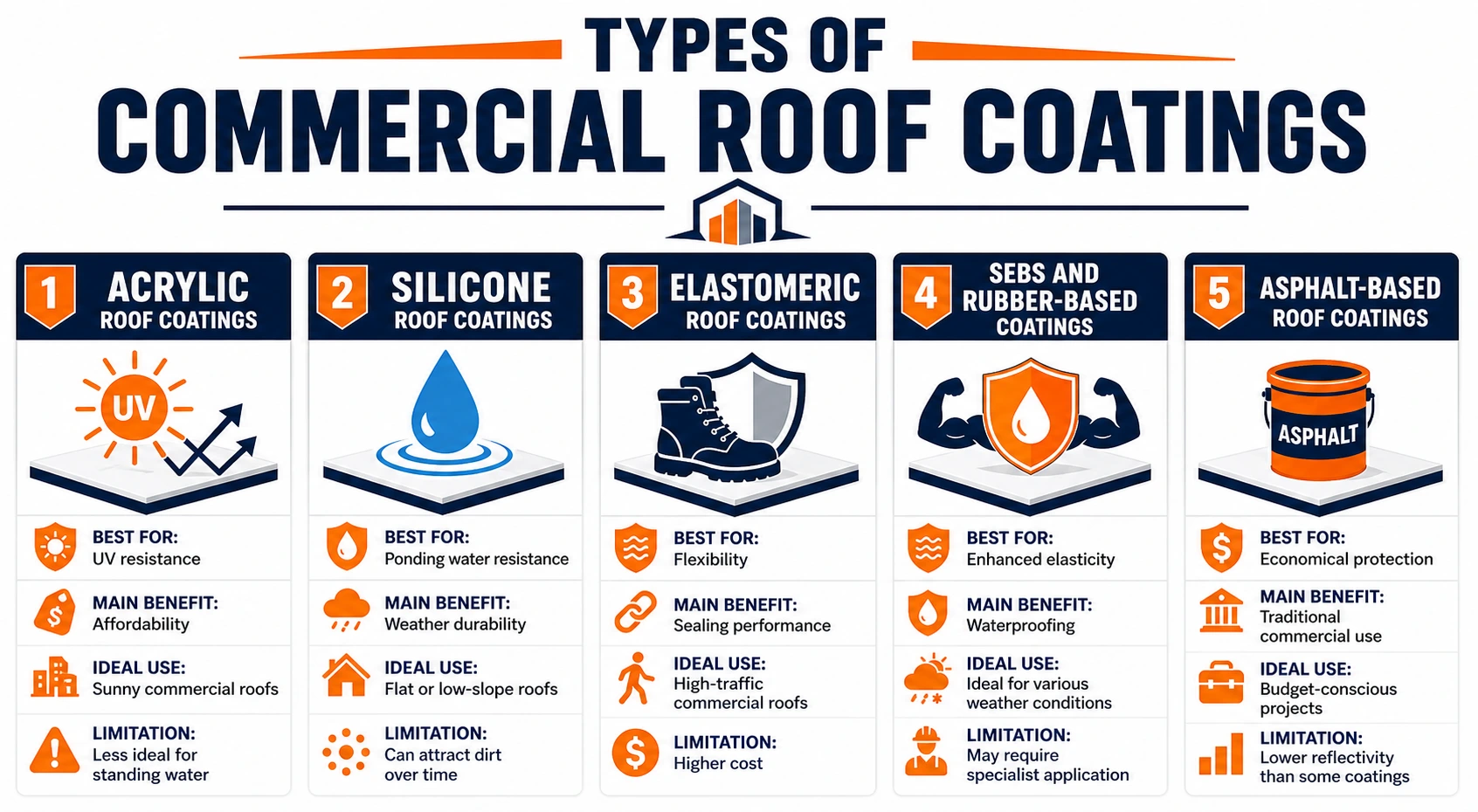
When choosing the right types of commercial roof coatings for your property, understanding the importance of regular roof maintenance is key. It can extend the lifespan of your building’s structural defense. For this, we have mentioned some highly effective roof coatings:
Acrylic Roof Coatings
One of the most used coatings for commercial roofs is acrylic, as it offers high solar reflectivity and UV resistance. Its water-resistant nature makes it ideal for sloped commercial roofs with proper drainage, as water does not remain on the surface for a long time. Their low VOC content makes them cost-effective and environmentally friendly.
Silicone Roof Coatings
When analyzing flat vs. sloped roofs for commercial building assemblies, flat structures require specialized materials to handle pooling water, making silicone an ideal choice. This coating is made up of silicone polymers that resist water infiltration, thermal expansion, and weather-related deterioration. One of the biggest technical advantages of silicone coatings is their exceptional hydrophobic performance. Thus, making silicone efficient for restoring TPO, EPDM, modified bitumen, and built-up roofing systems without the need for complete tear-off. Silicone coatings are fluid-applied, creating a monolithic membrane that seals seams, fasteners, flashings, and minor surface cracks.
Elastomeric Roof Coatings
This coating has a flexible membrane system, designed to expand and contract with changing roof movement. An elastomeric roof is a liquid-applied polymer system, made from acrylic, silicone, polyurethane, or hybrid resins. Known for its stretching capability, it bridges small gaps, seams, and surface imperfections without cracking. Because of its versatility to handle thermal shocks and structural movement, it often gets incorporated into other coatings. Its rubber-like elasticity significantly reduces structural stress on the roofing assembly, making it reliable for large commercial applications. This long-term adaptability is exactly why it makes it suitable to incorporate into other coatings, highlighting the regular roof maintenance importance, while choosing durable, proactive materials that protect your investment.
SEBS and Rubber-Based Coatings
Recommended for low-slope commercial roofing assemblies, Styrene-Ethylene-Butylene-Styrene (SEBS) offers high-performance commercial roofing solutions. It is a thermoplastic rubber polymer that offers great elasticity and tensile strength. Many commercial SEBS coatings have high elongation capability and can stretch between 400% and 700% without cracking. When compared to conventional acrylic coatings, it offers slightly higher tensile strength. This allows them to resist tearing, punctures and mechanical stress from rooftop equipment. As this coating is solvent-based, it bonds easily to the difficult roofing substrates without the need for a primer.
Asphalt-Based Roof Coatings
If you want an option that is highly compatible with bitumen-based substrates, these coatings are recommended. These are commonly applied to built-up roofing (BUR) and modified bitumen systems. The asphalt-based roof coatings are made by using bituminous compounds, combined with reinforcing fibers, mineral fillers, reflective pigments, or emulsifying agents. This ensures the coating protects commercial roofs from leaks caused by rain, humidity, and standing water, and helps the roof withstand thermal movement.
How Does the Roof Coating Process Work?
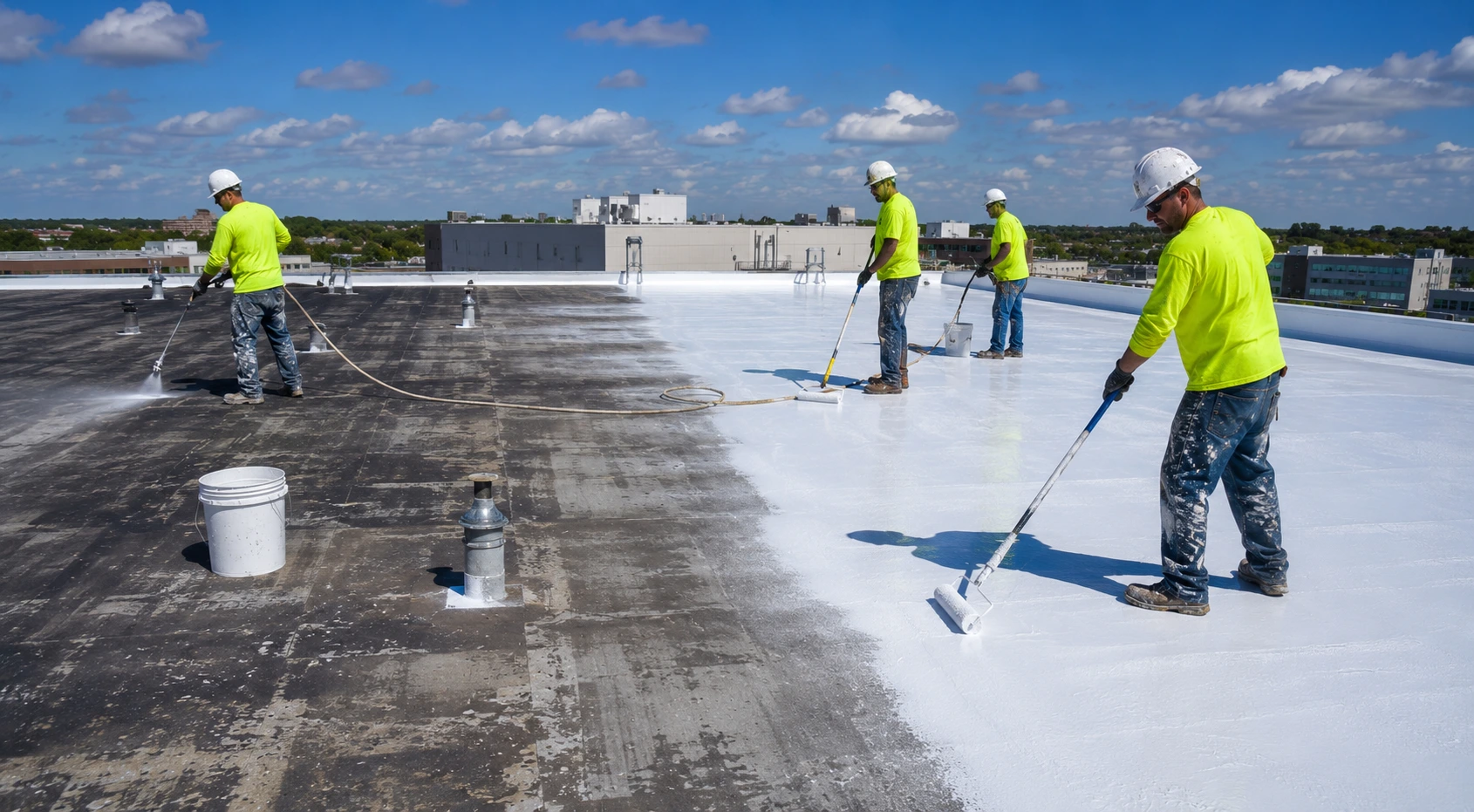
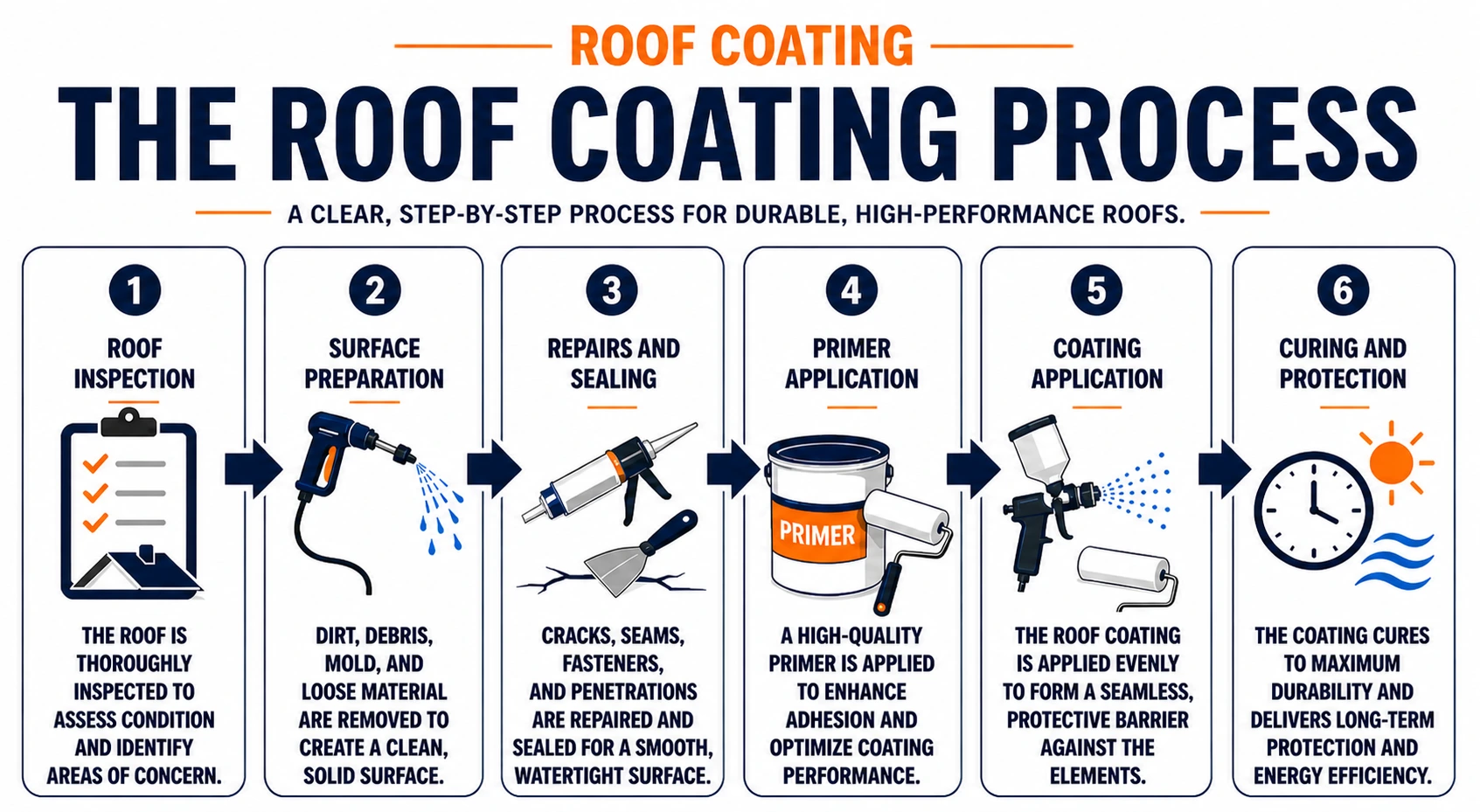
A commercial roof coating project follows a structured process that starts with inspection and surface preparation, then moves through repairs, coating application, and curing to create a protective membrane over the existing roof. The infographic below outlines the general workflow in a clear visual sequence, making each stage easier to understand at a glance.
Key Benefits of Roof Coatings
The key benefits of roof coatings include the following advantages that enhance the performance and longevity of commercial roofing systems:
Seamless Membrane Formation
Roof coatings give a continuous, seamless layer that eliminates joints, seams, and fastener exposure. This helps to reduce common leak points and create a consistent waterproof barrier, enhancing overall roof integrity, giving the commercial roofs a long life.
Restoration Without Full Tear-Off
It conveniently helps to restore the existing roofing without doing a complete replacement. And it has the property that enables it to be directly bonded to the current substrate, resulting in less demolition waste, labor costs, and downtime. Therefore, efficiently extending the roof’s service life and performance, without wasting your money.
Improved Adhesion of Existing Roof Layers
Your aged roofing system can be protected with the proper roof coating. Advanced coating systems use primers and polymer chemistry to hold the adhesion tightly between your aged roof and the new coating layer. This mechanism helps to stabilize deteriorated surfaces, prevent delamination, and improve structural bonding across commercial roof assemblies.
Moisture Vapor Barrier Control
Certain roof coatings act as vapor-controlling layers that reduce internal moisture migration within roofing systems. It stops blistering, prevents mold growth, and keeps the underlying insulation dry and effective.
Protection Against Oxidation and UV Breakdown
Your roof is always exposed to the exterior elements. So, a reliable coating can always be a shield that protects your roof from harsh sunlight and prevents exposure to oxygen. This prevents the roof from drying out, cracking, and becoming brittle, significantly slowing down the natural aging process.
Conclusion
Now, as we have seen, any commercial roof can be protected without always being replaced or reconstructed. To make this job easier, our team at TridentPro Construction offers you effective, long-lasting solutions for coating your commercial rooftops. With us, you can invest at the right place to unlock key commercial roof coatings benefits and get a highly cost-effective strategy. This can add life to your building and protect it from premature failures, ultimately preventing expensive replacements.
So without further delay, contact us for reduced maintenance expenses, precision application, premium materials, and commercial roofing solutions that truly stand the test of time.
FAQs
How do I know if my commercial roof needs coating instead of replacement?
When your roof shows the signs of leaks, surface wear, or aging membrane issues, it is often considered for coating with prior inspection.
Will roof coatings stop my existing roof leaks immediately?
Once the coating is properly applied, it seals active leakage and cracks, but make sure that underlying moisture issues are cleared first.
How long does a commercial roof coating application take?
As per your roof size, weather conditions, and prior surface preparation, most of the coating can be applied within a few days only.
How important is roof preparation before applying coatings?
Proper cleaning, moisture testing, and repair work are critical; poor preparation can lead to adhesion failure and reduced coating lifespan.
How much roof life can coatings realistically add?
Depending on roof condition and coating type, they can extend service life by approximately 10 to 20 years with proper installation and maintenance.
Can roof coatings handle rooftop equipment and foot traffic?
Yes, but high-traffic areas may require reinforced or polyurethane-based coatings designed specifically for mechanical stress zones.