Houston homeowners often expect their roofs to provide reliable protection for decades, but the city’s climate can accelerate the normal aging process. Intense sunlight, extremely high temperatures, humidity, rainfall, high winds, and hail can place continuous demands on roofing systems. These conditions affect different roofing components in different ways, making the actual lifespan of a roof dependent on more than its installation date.
Knowing what influences roofing longevity can help you recognize when your system is approaching the end of its useful life and plan for necessary work. This guide explores the factors that affect roof lifespan in Houston and how professionals assess a roof’s remaining service life.
Roof Lifespan in Houston: Key InsightsHouston roof longevity depends on material quality, climate exposure, drainage, flashing, underlayment, fastening, installation workmanship, and ongoing maintenance. Roof age provides an initial reference, but actual condition and performance determine replacement timing. Professional assessments consider installation date, physical wear, concealed areas, performance history, and overall system condition to estimate remaining service life. Understanding these factors helps homeowners plan maintenance, recognize potential concerns, budget for replacement, and protect their property from unexpected roofing expenses. |
Is Roof Age the Best Indicator of Replacement?
Your roof’s age offers a useful reference, but it does not automatically determine when replacement is necessary. Two roofs of the same age can perform differently because of material quality, installation, maintenance, and environmental exposure. Understanding your roof life expectancy alongside visible conditions provides a more accurate picture. Recurring leaks, sagging, surface deterioration, and frequent repairs may indicate declining performance. A professional assessment can help determine if roof replacement services are needed and the right time to schedule them.
Factors That Influence Roof Lifespan in Houston
Houston’s climate and roofing system design can affect durability and performance in several ways; here are the key factors:
Roofing Material and Quality
Roofing materials differ in durability, heat resistance, and expected service life. A U.S. Forest Service study found black fiberglass shingles reached 68.2°C (154.8°F), compared with 47.1°C (116.8°F) for western red cedar shingles, showing how material choice affects heat exposure. [1] Product thickness, coatings, manufacturing quality, and design also influence performance. These factors become especially important when addressing common roof problems in summer, as prolonged heat can accelerate material stress and deterioration.
Roof Slope and Drainage
Roof pitch determines how efficiently rainwater moves toward gutters, drains, and outlets. Low-slope roofs need carefully designed drainage because slower water movement can increase exposure. Proper slope and clear drainage pathways help prevent prolonged water accumulation and related deterioration.
Flashing and Roof Penetrations
Roof penetrations around chimneys, vents, skylights, and walls require precise flashing details. Flashing seals these transitions against water entry. Poor installation or deterioration can create vulnerable points, allowing water intrusion even when surrounding roofing materials remain intact.
Underlayment and Roof Deck
Underlayment provides an additional protective layer beneath the roof covering, while the deck supports the entire assembly. Damage within these concealed components can compromise structural integrity and moisture protection, making their condition important to the roof’s overall performance.
Fasteners and Attachment Methods
Fasteners secure roofing materials to the supporting structure, making their specification and installation critical. Incorrect fastener type, spacing, or penetration can weaken wind resistance and allow movement. Proper attachment maintains the roof’s structural connection and supports reliable performance.
Installation Workmanship
The quality of the original installation can influence performance throughout the roof’s service life. Incorrect overlaps, improperly sealed joints, inadequate edge detailing, and poor component placement individual components function together as intended.can create weaknesses from the beginning. Following manufacturer instructions and applicable building-code requirements helps ensure that the roofing assembly is constructed correctly.
Maintenance and Inspection
Routine upkeep helps preserve roofing performance as the system ages. The thermal roof system performance study found that 32 of 41 inspected roofs, approximately 78%, had potential problems that could shorten service life, many addressable through preventive or corrective maintenance. Regular inspections help identify these concerns early, highlighting the importance of regular roof inspections and maintenance for addressing developing issues, preventing further deterioration, and maximizing practical roof service life.
Get expert guidance for your Houston roofing needs from professionals who understand local conditions and focus on dependable, long-term roof performance. |
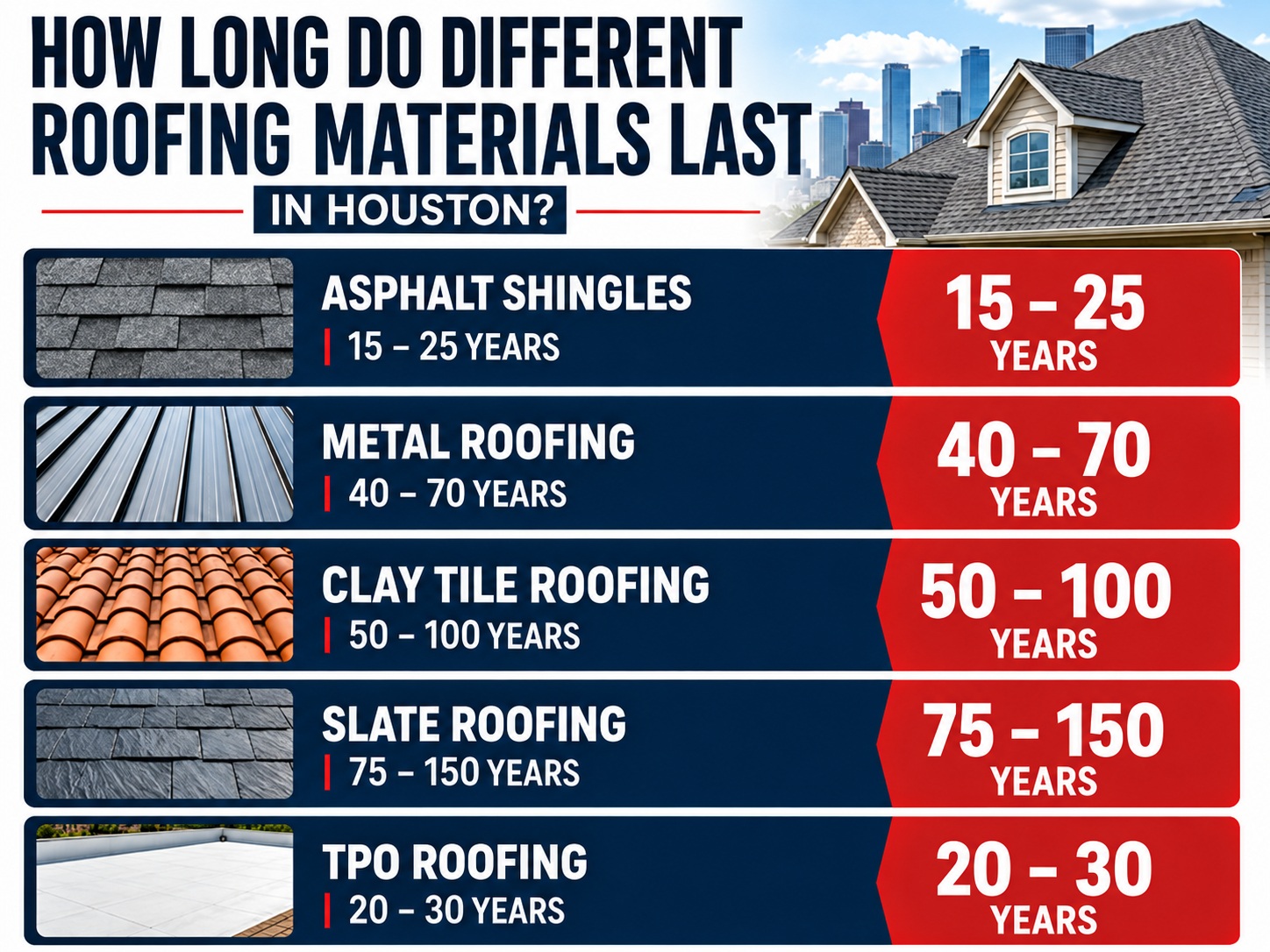
What Is the Lifespan of Roofing Materials in Houston?
Different roofing materials have different expected service lives, and Houston’s climate can influence how long each one performs. Here is what homeowners can typically expect from the most common roofing materials:
How Roofing Professionals Estimate Remaining Roof Life
A professional assessment looks beyond your roof’s age to determine how much reliable performance you can realistically expect from it.
Identify the Roof’s Installation Date
Professionals begin by confirming when the roof was installed and identifying its specific material and product. They compare its age with the manufacturer’s expected service range, creating a baseline for judging how much useful life may reasonably remain.
Measure the Roof’s Remaining Wear
Inspectors evaluate visible deterioration across multiple sections instead of focusing on one damaged spot. They check conditions such as cracking, brittleness, granule loss, corrosion, coating deterioration, or surface fractures to determine how significantly aging has affected the roofing materials.
Inspect Areas That Reveal Hidden Aging
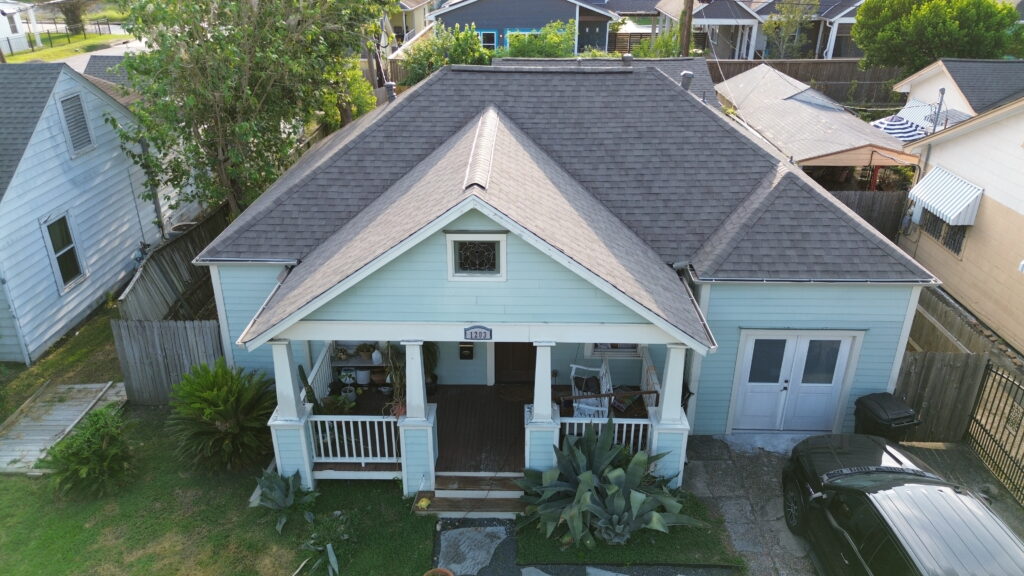
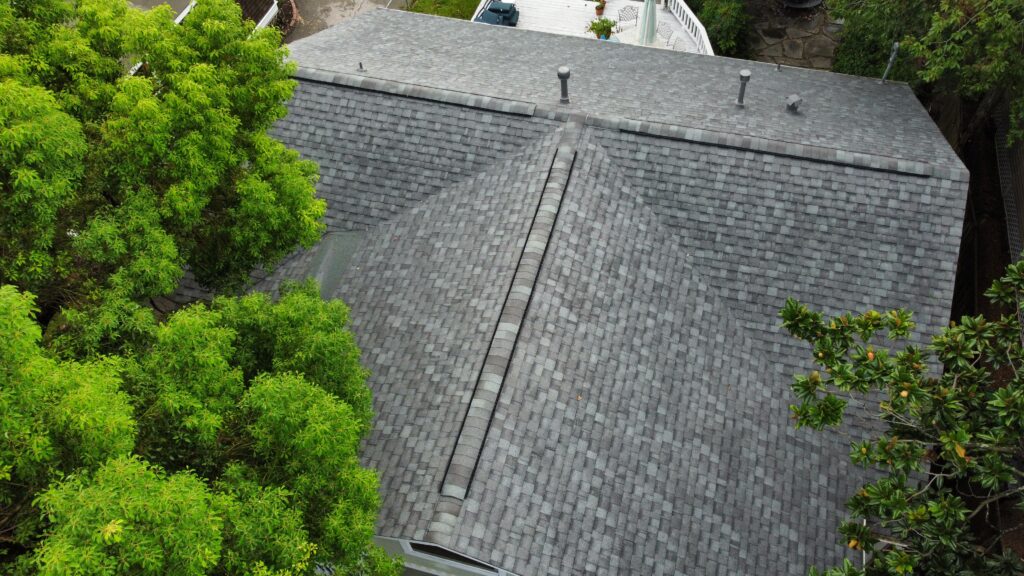
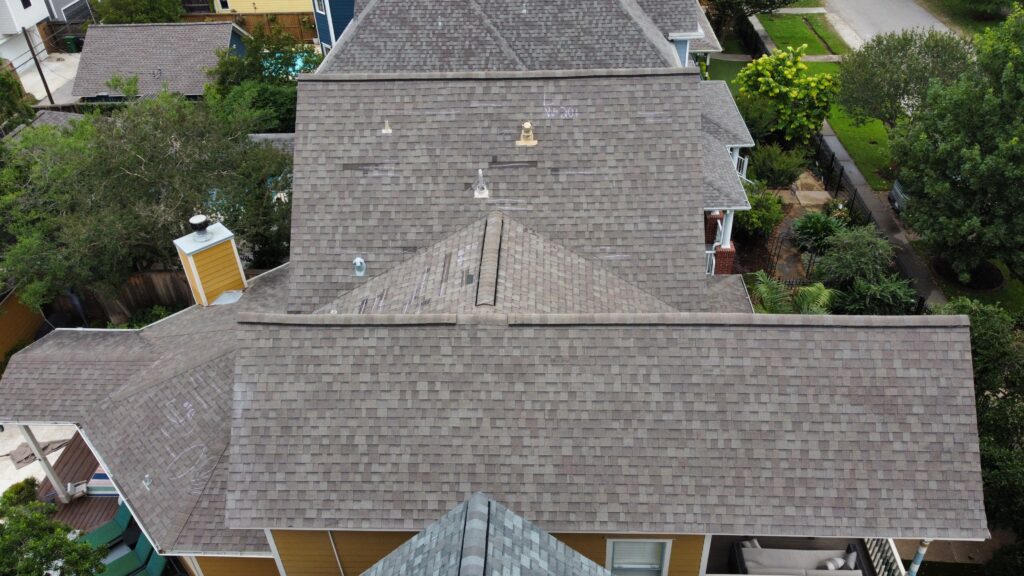
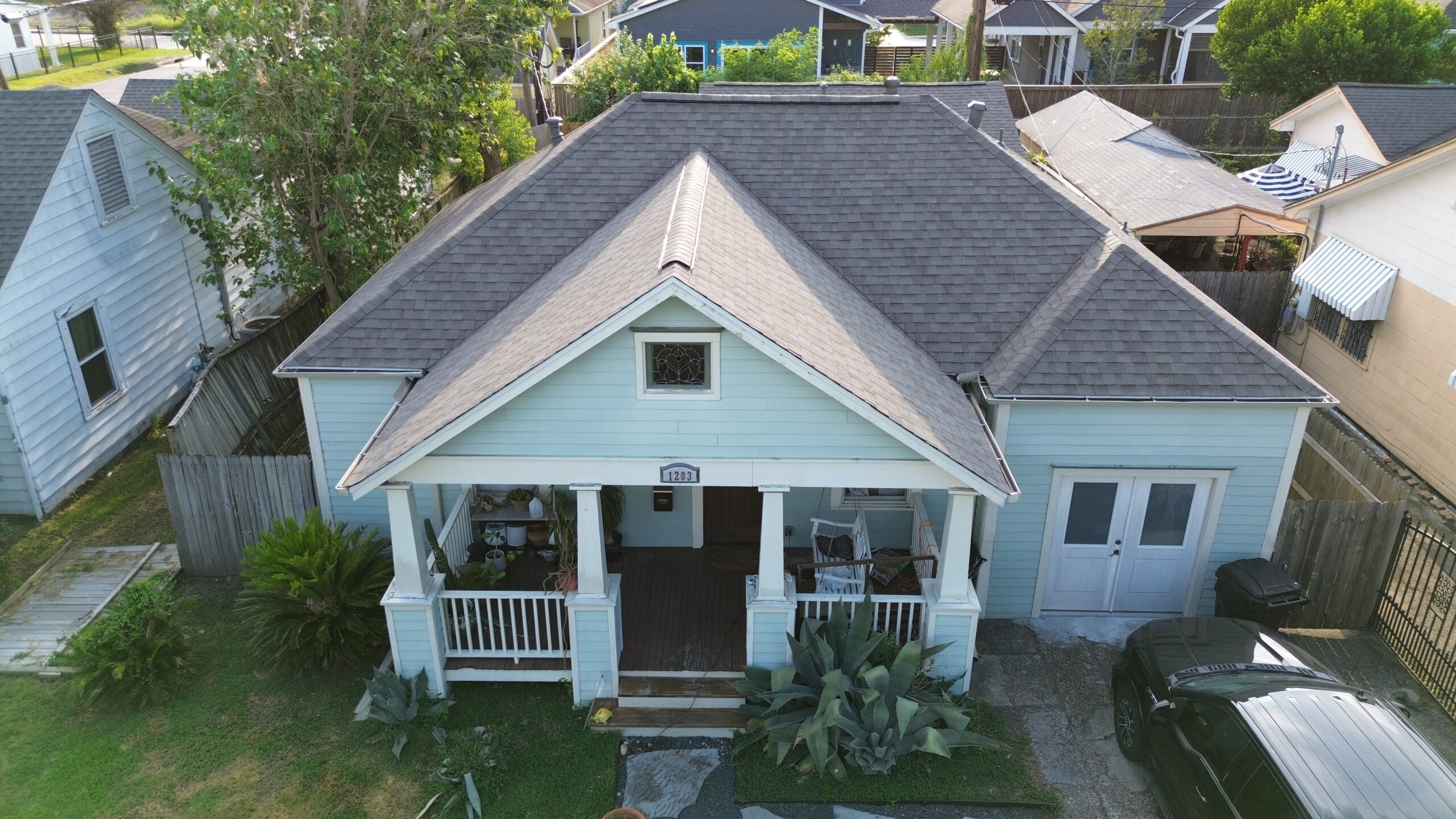
Professionals examine roof edges, valleys, seams, transitions, and penetrations because these areas can reveal deterioration that is difficult to see from ground level. Drone roof inspections improve accuracy by providing detailed visual access to difficult-to-reach sections, helping inspectors identify potential concerns and develop a more complete assessment of the roof’s overall condition.
Evaluate the Roof’s Performance History
Past roofing records help professionals understand how consistently the system has performed. They review documented leaks, maintenance work, recurring concerns, and previous corrective actions to identify patterns that may indicate underlying problems. Roofing insurance claims can also provide useful records of previous storm-related damage, repairs, and roofing work, helping professionals better understand the system’s performance history and condition.
Determine the Roof’s Replacement Timeline
After reviewing the roof’s age, physical condition, and performance history, professionals determine the most practical next step. They may recommend continued monitoring, maintenance, repairs, or replacement planning, helping homeowners prepare financially and avoid unexpected roofing emergencies.
Conclusion
Your roof’s lifespan depends on more than age, especially under Houston’s demanding climate. Proper materials, quality installation, routine maintenance, and timely inspections can help you avoid premature replacement and protect your property for years to come. At TridentPro Construction, we focus on the details that keep your roofing system performing reliably. From professional inspections to repairs and replacement, our experienced team helps you make confident decisions about your roof’s future.
Protect your Houston property with roofing solutions designed to handle local weather conditions, improve long-term performance, and give you greater peace of mind. |
Frequently Asked Questions About Roof Lifespan in Houston
Does a roof warranty guarantee its full expected lifespan?
No. A warranty generally covers specific manufacturing defects or workmanship issues under stated conditions, but normal aging, improper maintenance, and certain weather events may have exclusions.
Can homeowners extend their roof’s lifespan beyond its expected rating?
Yes. Proper attic conditions, suitable maintenance, prompt attention to minor issues, and professional evaluations can help a roofing system remain functional beyond its typical service range.
What is the average lifespan of a roof in Houston?
Most roofing systems can last for many years, but their actual lifespan varies according to material, installation standards, maintenance, and Houston’s environmental conditions.
When should I start planning for a roof replacement in Houston?
Start planning when your roof enters the later portion of its expected service range, especially if inspection findings suggest declining performance or increasing maintenance requirements.
Can replacing only part of an old roof extend its overall lifespan?
Partial replacement can address localized problems, but matching materials and maintaining compatibility with the existing assembly can become increasingly difficult as the roof ages.