Houston homeowners filing a roof insurance claim may find that the contractor’s inspection report plays an important role in documenting the reported damage. A clear report should record relevant storm dates, identify specific damage patterns, note material specifications, and include photographs that support the contractor’s observations. These details help the insurer and adjuster understand the roof’s condition and evaluate the reported loss based on documented evidence. Texas insurance requirements and claim procedures can affect how roof damage must be documented, so knowing what to include in the inspection report helps homeowners submit complete claim documentation.
This guide simplifies the key elements a thorough Houston roof inspection report should contain and explains why each matters during the insurance claim process.
Contractor’s Inspection Report: OverviewA contractor’s inspection report for a Houston roof insurance claim should document the storm event, test-square findings, shingle-level damage, affected components, measurements, photographs, and roof diagrams. It should distinguish storm-related damage from pre-existing wear, quantify the required repair work, identify concealed conditions when discovered, and address applicable code requirements. Clear, verifiable documentation provides insurers with the technical evidence needed to evaluate the reported loss, the repair scope, and disputed claim amounts. |
What a Roof Assessment Should Document for an Insurance Review
A comprehensive roof assessment should document the physical condition of the roofing system, the reported storm event, affected components, and evidence that allows the insurer to evaluate the claimed loss.
Storm Event Causation
Document the exact date and approximate time of the storm, the reported peril, and supporting hail or wind data for the property’s ZIP code. Cite reliable sources, such as NOAA or an NWS local storm report, and note the storm’s path when it helps connect the storm to the affected roof slopes. This information helps in understanding climate for roofing conditions, particularly while finding the effect of weather on roofing over time.
Test-Square Methodology & Hit Density
For hail inspections, identify each 10×10-foot test square by roof slope and location, then record the number and type of qualifying impacts. Express findings as hits per 100 square feet and indicate the percentage of each slope affected, rather than relying on an overall statement of hail damage.
Shingle-Level Damage Signatures
Record specific functional damage such as bruising, fractured fiberglass mats, circular granule loss, lifted shingles, and broken seal strips. These physical signs of roof damage are particularly important when documenting hail damage on a roof, because the assessment should distinguish impact-related damage from algae, blistering, foot-traffic damage, or UV fading.
Component-by-Component Findings
Inspect and separately document flashing, ridge and hip caps, valleys, vents, pipe boots, gutters, downspouts, and soft-metal components. Record the quantity and location of dents, bends, separations, cracks, or other physical damage, including relevant collateral evidence on items such as screens, siding, stucco, or exterior fixtures.
Photo & Diagram Package
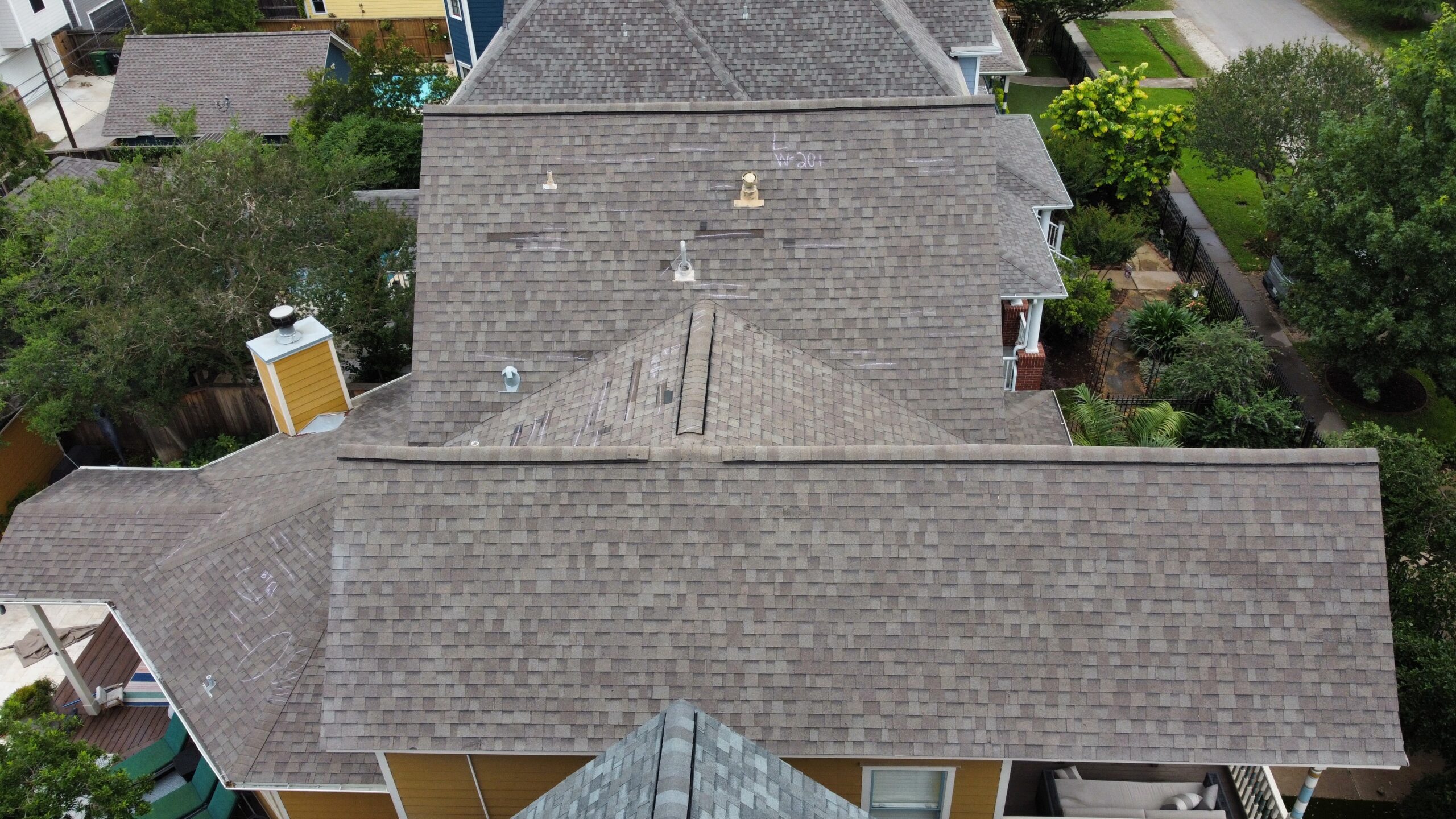
Provide labeled wide-angle photographs of each roof slope and close-ups showing representative impacts with a ruler or coin for scale. Include images of lifted shingles, damaged components, gutter granules, and interior staining, supported by a roof diagram marking affected areas and clearly identifying the corresponding photographs. This helps the roof inspection report by connecting individual photographs with specific roof locations and documented findings.
Have TridentPro Construction assess your roof with drone imaging, hands-on inspection, and precise EagleView measurements for your insurance documentation. |
What Makes a Roof Inspection Report Credible?
When filing a Houston home roof insurance claim, your inspection report should present complete, accurate, and verifiable information. Therefore, it should cover the essential details that make the documented findings credible to the insurer. To help you understand what makes a roof inspection report credible, our infographic highlights the key elements your report should include.
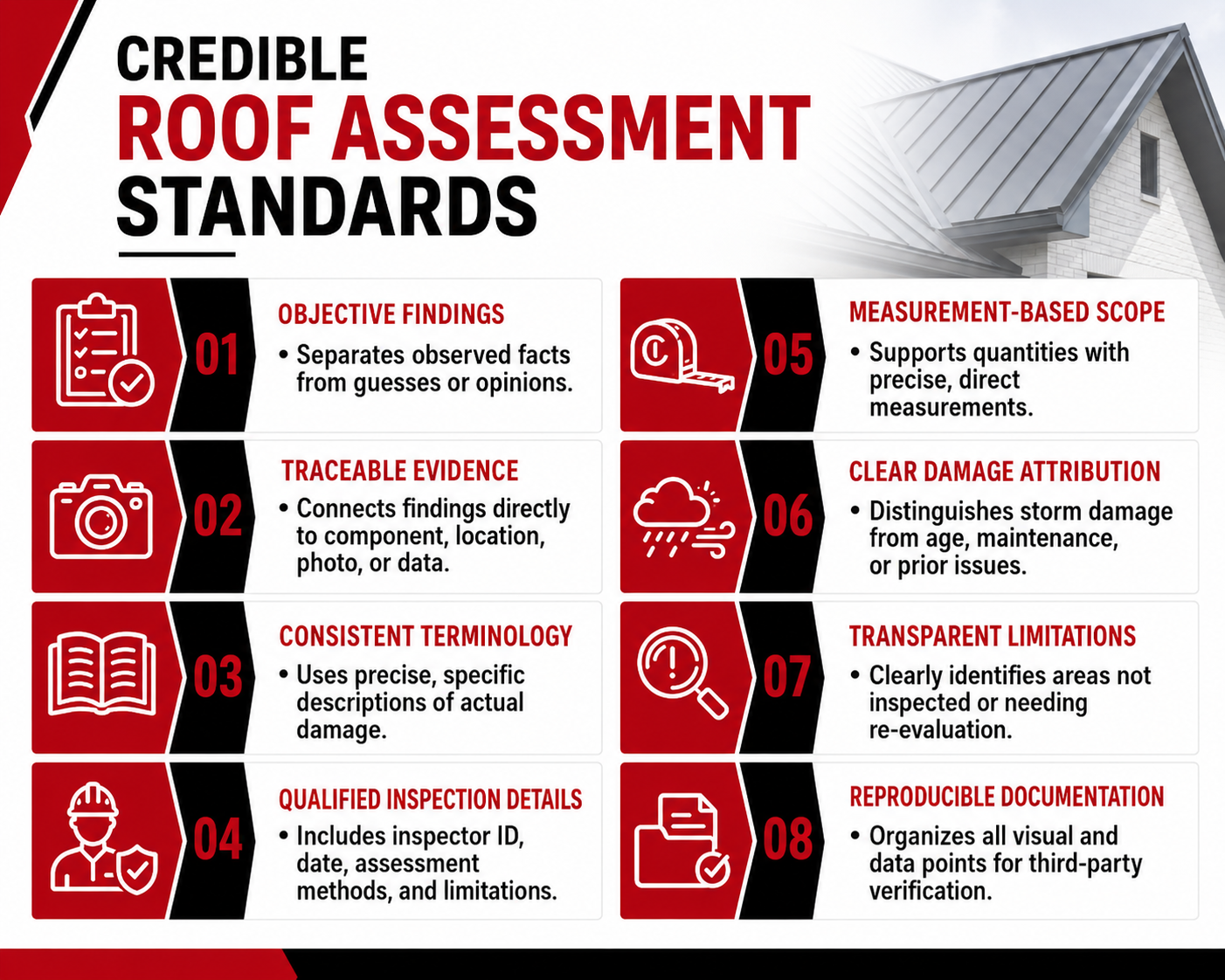
How a Roof Inspection for Insurance Supports Your Claim
Supports the Amount-of-Loss Dispute
A report becomes especially valuable when the disagreement is about how much damage exists, rather than if the policy covers the event. Measurements, affected quantities, material identification, and repair requirements give the homeowner evidence for challenging an incomplete scope. This distinction is important because the Texas Department of Insurance reports appraisal as a mechanism for disputes concerning the amount of loss, not if the policy covers the loss.
Separating Storm Damage from Pre-Existing Wear and Tear
An inspection can strengthen a claim by establishing which roof conditions are attributable to the reported event and which existed independently. This distinction matters because Texas TDI states that insurance does not pay for a new roof simply because an existing roof is old or worn. Documenting deterioration, previous repairs, and storm-related physical changes separately gives the insurer a clearer basis for evaluating the claimed loss rather than treating the entire roof condition as one problem.
Strengthening Your Position on High Wind and Hail Deductibles
For a wind or hail claim, the inspection can document the specific extent and distribution of physical damage associated with the reported peril. This does not establish that a deductible applies or determine its amount; the policy controls that. However, documenting qualifying damage gives the insurer a factual basis for evaluating the reported wind or hail loss under the applicable coverage and deductible provisions. TDI, in its report on “Insurance and your roof: What to know when buying a policy or filing a claim,” notes that wind and hail deductibles may differ from other policy deductibles.
Gives the Insurer Grounds to Reconsider an Incomplete Claim Assessment
A contractor’s follow-up roof inspection for insurance can strengthen the claim when the insurer’s initial assessment does not account for all documented conditions. By identifying the specific roof areas, components, or repair requirements omitted from the original scope, the inspection report gives the homeowner new technical evidence to submit for reconsideration. Where an additional inspection is needed to verify the roof’s condition, understanding the importance of roof maintenance can also provide useful context about how the property’s condition was monitored before the reported loss.
How Contractors Can Strengthen a Houston Roof Insurance Claim
Translate Roof Damage Into a Defensible Repair Scope
A contractor can determine what construction work is actually required to restore the damaged roofing system, rather than simply reporting that the roof is damaged. This may involve defining the required sequence of tear-off, replacement, flashing work, underlayment installation, ventilation work, and other associated operations. This gives the insurer a construction-based explanation of what the proposed repair involves and why each operation appears in the estimate, making the claim scope more technically useful.
Establish the Actual Quantity of Roofing Work Required
Contractors can measure the roof and convert the inspection findings into quantifiable construction quantities such as affected roof areas, linear feet of relevant components, quantities of replacement materials, and disposal requirements. This is particularly useful for roof insurance claims when the insurer’s estimate and the contractor’s proposed scope contain different quantities. The contractor can show how the quantities were derived from the property’s actual dimensions rather than presenting an unsupported replacement price.
Identify Repair Conditions That Become Apparent Only After Tear-Off
Some conditions cannot be fully evaluated while the existing roof covering remains in place. Once damaged materials are removed, a contractor may discover additional construction conditions involving the roof deck, underlayment, flashing, or other concealed areas. The contractor can document the newly exposed condition, explain why it could not reasonably have been established during the original inspection, and provide the additional work and associated cost for the insurer’s consideration.
Identify Whether the Proposed Repair Requires Code-Compliant Reconstruction
Where applicable, the contractor can determine whether the proposed repair triggers current construction or windstorm requirements and identify the work necessary to complete the repair compliantly. This is especially important for properties subject to Texas’s Windstorm Inspection Program. The study mentioned in the What You Need To Know About Windstorm Inspections report by TDI suggests that certain roof replacements, major repairs, and alterations require inspection and certification, and contractors should determine how the project will satisfy those requirements.
Conclusion
A well-prepared contractor’s inspection report can give your Houston roof insurance claim the technical detail needed for a proper review. At TridentPro Construction, we combine hands-on inspections, drone imaging, EagleView measurements, detailed reporting, and insurer communication to document storm damage and support supplemental estimates when needed. Our Houston roofing team helps you move from inspection to a clearly documented claim and the repairs your property requires.
Need help with your Houston roof insurance claim? TridentPro Construction provides storm-damage documentation, insurer communication, and supplemental quotes to support your claim. |
Frequently Asked Questions About Houston Roof Claim Reports
Should a contractor sign and date the roof inspection report?
Yes, the report should identify the inspector and inspection date to establish who performed the assessment and when.
Can a contractor document areas that were inaccessible during inspection?
Yes, inaccessible or unsafe areas should be identified rather than presented as inspected conditions.
Should the report include the roofing manufacturer and product information?
When available, identifying the manufacturer, shingle type, or product specifications can clarify the existing roofing system.
Does an inspection report need to state the recommended repair method?
A contractor can explain the recommended repair approach and the construction reasoning supporting that recommendation.
Should the report document temporary repairs already performed?
Yes, temporary measures such as tarping or emergency repairs need to be present because they may affect the roof’s current condition.