Without you even knowing, the temperature in Houston starts to drop, and you start seeing cracks or mysterious ceiling stains creeping in after the first cold front. Other problems, like ice dams and clogging of drains, are also common during winter and often come up without giving you any warning signs. Well, these seasonal stresses can reduce your roof’s durability and energy efficiency. Do not worry, many people deal with cold-weather roofing problems. So we have made this guide that breaks down exactly why it takes a toll on your roof and what you need to watch out for. So, let’s begin!
Understanding: Cold Weather Roofing RisksCold weather in Houston can damage roofing systems through freeze-thaw cycles and moisture buildup, leading to issues like cracks, leaks, and condensation. Both residential and commercial property owners should take care of these risks early and address them with timely repairs and proper maintenance to prevent costly damage. |
How Does Cold Weather Damage Differ?
The cold weather has a different kind of impact on both residential and commercial roofs. This is how it looks on both properties:
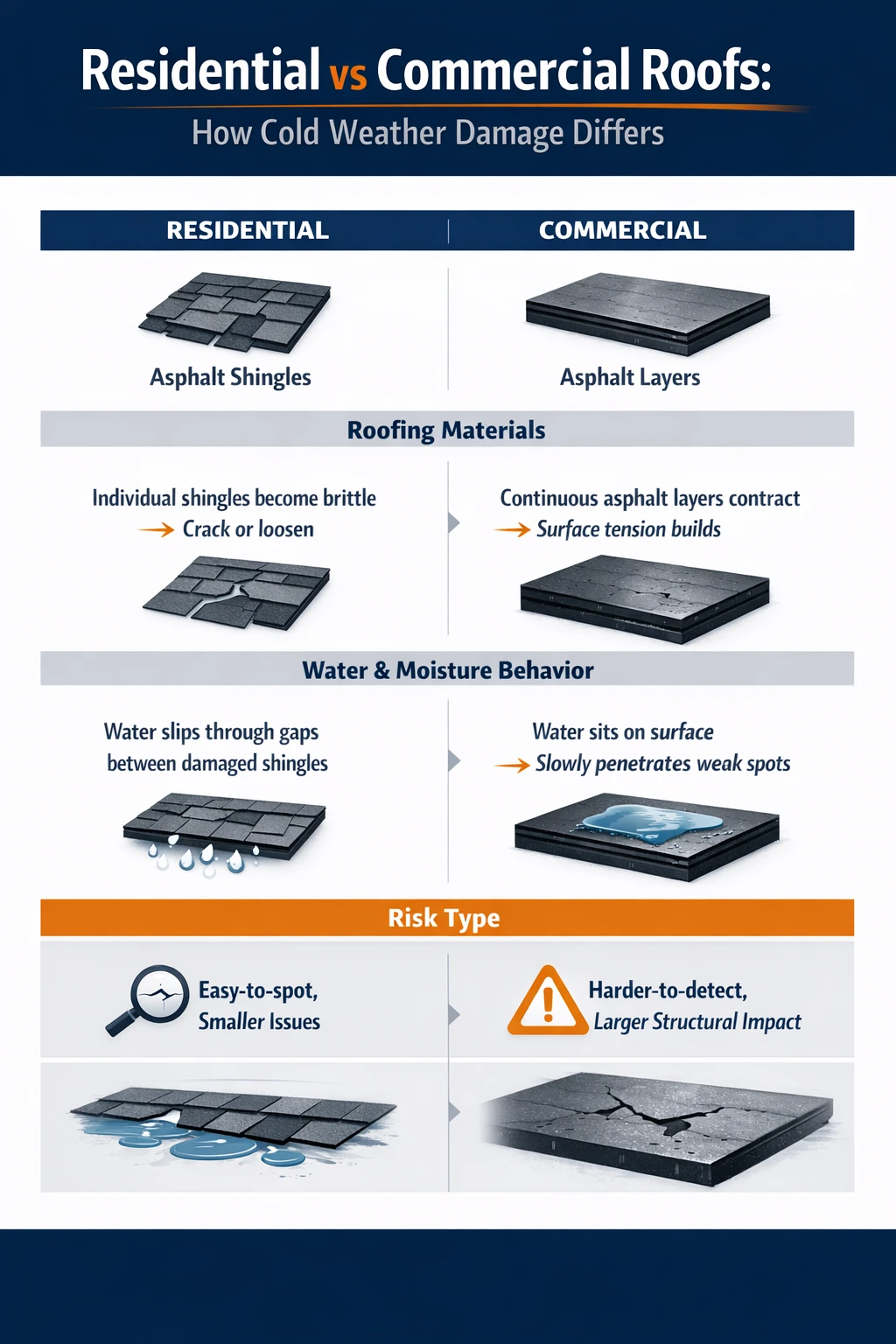
Why Cold Weather Impacts Roofing Systems?
Less Flexibility and Moisture-Driven Expansion in Cold Weather
When temperatures go down to 40°F, materials like asphalt shingles, which are generally seen in most Houston homes, lose their flexibility. This leads to humidity seeping in and causes expansion and shrink cycles. In the end, all of this will lead to:
- Cracking
- Lifting
- Weakening of the structure
This becomes even more concerning after events like a hailstorm impact on asphalt shingles, where already weakened materials are more likely to fail in cold weather.
Protective Layers Don’t Work as Well in Cold Weather
Cold weather reduces how well protective layers like underlayment and waterproof barriers perform, making them less responsive to stress and changes. This weakens the roof’s overall ability to resist water entry and external damage over time.
Accelerated Cumulative Wear
In Houston, the climate impact on roofing is not like northern areas that stay regularly cold. It faces repeated freeze-thaw cycles within the same week, and this stress breaks down materials quite quickly.
Compromised Sealants and Adhesives
The cold temperature will not let the roofing sealants and self-adhering tapes stick properly, leaving gaps along flashing, ridges, and penetrations that become active entry points for water.
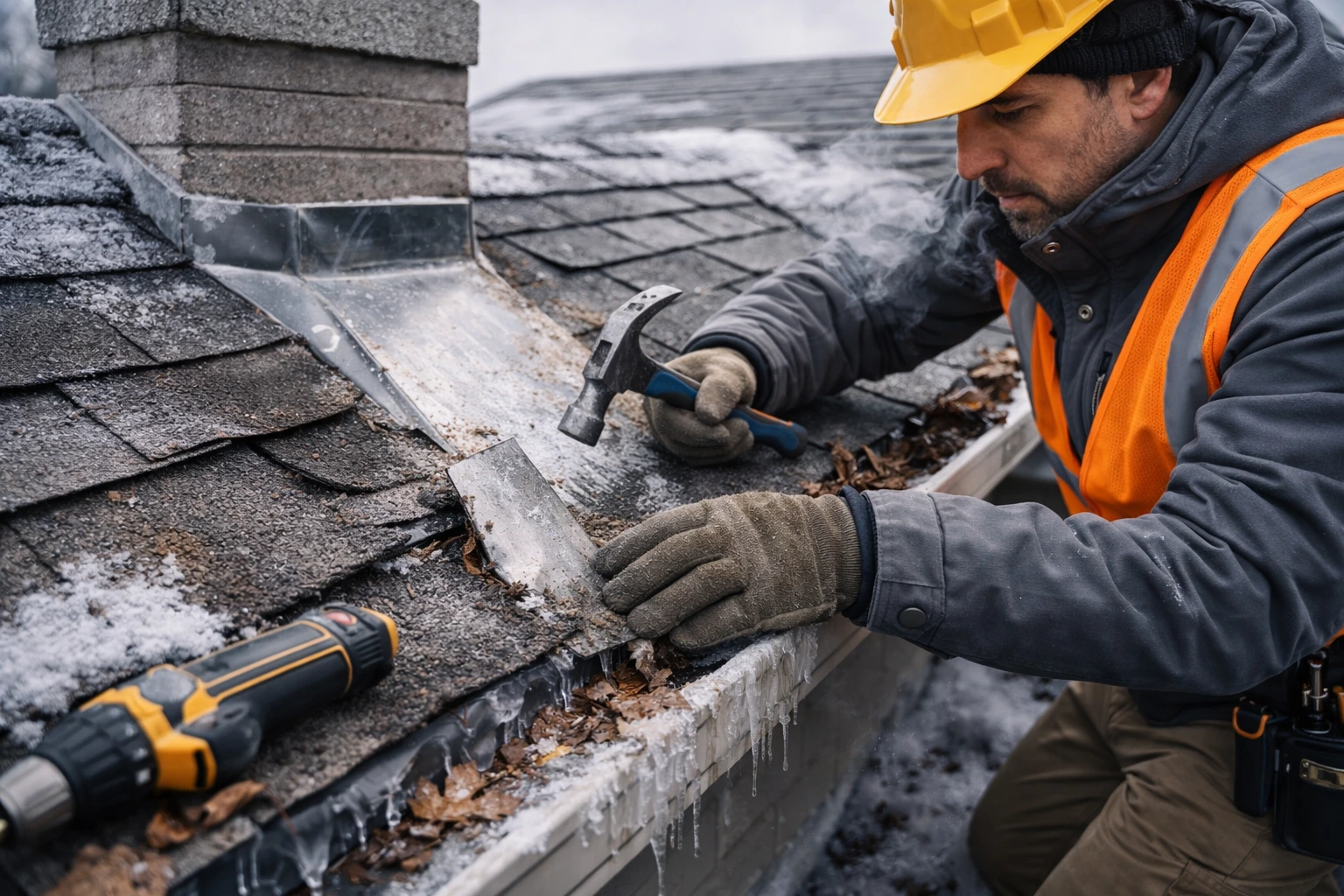
Major Cold-Weather Roofing Issues and Their Solutions
Cracked Shingles
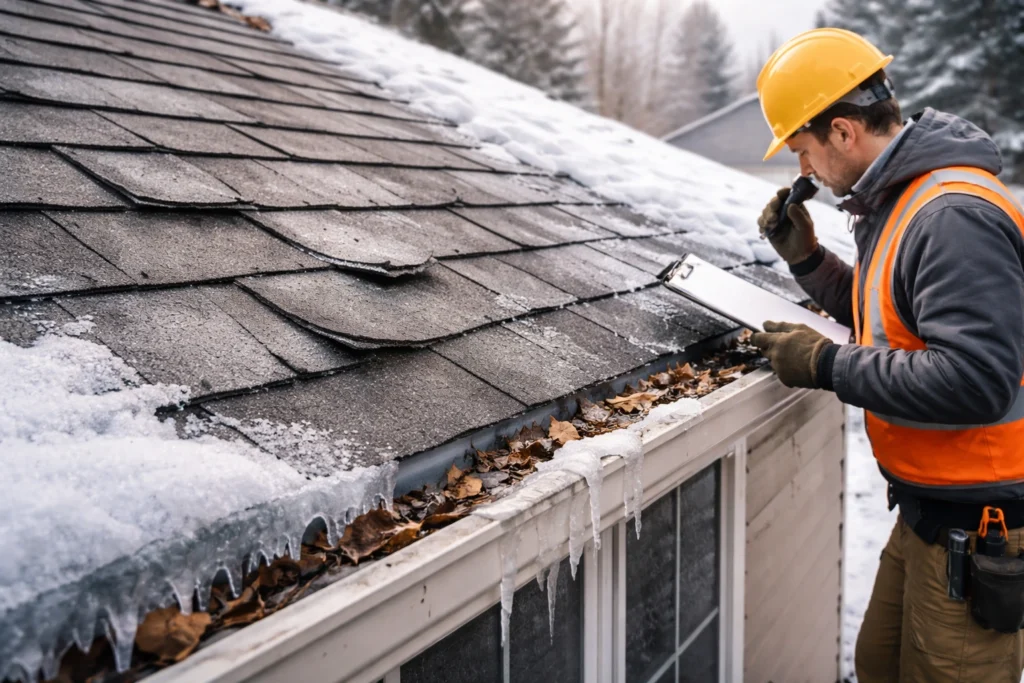
Problem: Cracked shingles appear after a freeze-thaw cycle, reducing insulation efficiency and exposing the underlying decking to the risk of structural damage.
Solutions:
- Change the damaged ones quickly
- Seal all the weak areas
In cases where the damage is caused by prior storms, consider repairing hail-damaged roof sections quickly to prevent further deterioration in cold weather.
Flashing Failure Around Penetrations
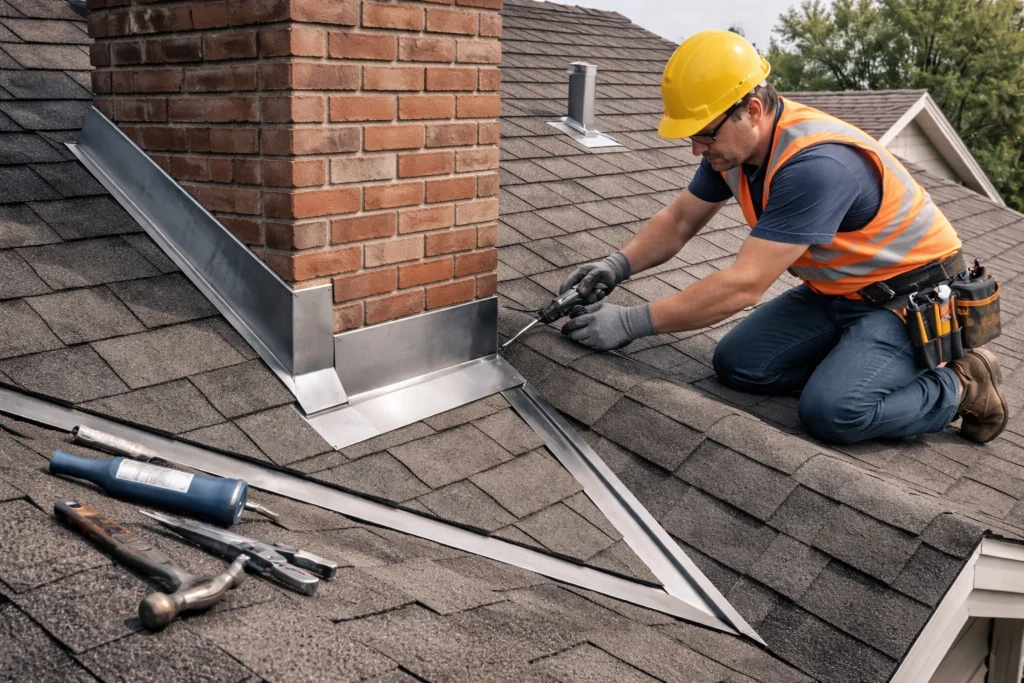
Problem: Another very common cold-weather roofing problem is that the metal flashing around chimneys, HVAC units, and vents contracts. This creates gaps through which water flows directly into the roof deck.
Solutions:
- First, inspect and reseal all flashing joints with a compatible cold-weather sealant
- Then, replace any sections showing corrosion or separation.
Gutter Ice Buildup and Overflow
Problem: During Houston cold snaps, runoff from sudden rainfall freezes at the edges of your gutters, blocking drainage and causing water to pool along the roofline and into the fascia boards.
Solutions:
- Regularly clean the gutters
- Ensure proper slope
- Install gutter guards
- Check downspouts to maintain smooth water flow away from the building
For better guidance on checking all these issues systematically, refer to our roof safety checklist after a snowstorm.
Condensation and Moisture in the Attic
Problem: Another major winter roof problem is when warm indoor air hits the cold roof, causing condensation that can lead to mold and wood rot in the attic.
Solutions:
- Proper ventilation in the attic
- Install vapor barriers
- Have the same indoor temperatures to control moisture levels
Flat Roof Membrane Stress
Problem: The standing water on flat or low-slope commercial roofs freezes overnight into sheets, stressing membrane seams and accelerating leaks, causing additional winter roof problems.
Solutions:
- Ensure your drainage outlets are clear before cold weather
- Call a commercial roofing contractor to inspect and reinforce membrane seams annually
Roof Leaks and Stains
Problem: The cold weather opens small gaps in flashing and seams, allowing water to get inside, which leads to visible stains, mold growth, and interior damage. In fact, according to the U.S. Environmental Protection Agency, mold can begin growing within 24–48 hours after exposure to moisture if materials are not properly dried.
Solutions:
- Inspect flashing
- Seal joints
- Renovate leaks immediately
Conclusion
The cold weather in Houston might stay for a shorter period of time, but the damage it leaves is huge. Hence, make sure to catch these issues early to avoid emergency repairs mid-winter. If you still have any doubts, TridentPro Construction is there to assist you with everything. With years of experience, we are a trusted, locally owned roofing company in Houston, specializing in everything from damage restoration to full-scale remodelling.
FAQ’s
How many times should my roof be checked before winter?
Get it checked at least once a year. Also, ideally, in the fall before the first major snowfall.
Should I get the repair done or fully replace my roof after cold-weather damage?
If your roof is 15 years old with isolated damage, repair it. And, if it is old with major issues, then it only needs full replacement.
How long can I let my roof leak go unrepaired in winter?
Do not wait. You will see that just in a few hours, moisture will go into the deck, or let the mold grow, and cause heavy damage to the structure.
Can tree branches near my roof cause more damage during cold snaps?
Yes, cold makes branches weak. They break easily in the wind, fall onto roofs, and damage both stiff and fragile roofing materials.
How do I know if my roof is leaking when there’s no visible damage on the outside?
Start in the attic and trace water stains uphill, as leaks often travel far from their actual entry point.