Algae, moss, and mold commonly grow on roofs, especially in humid conditions. Algae leaves behind stubborn black stains, moss forms thick green clumps, and mold creates slippery, unhealthy patches. These growths do more than just affect your home’s appearance. Over time, they trap moisture, weaken roofing materials, and shorten the lifespan of your roof. In some cases, they can even reduce your property value by up to 10%.
Fortunately, with the proper cleaning methods, you can remove roof moss safely without damaging your shingles. Let us explore these effective ways to restore your roof today.
Roof Cleaning: Safe Removal Methods OverviewAlgae, moss, and mold can weaken roofs by trapping moisture and damaging shingles over time. Identifying them early helps prevent costly repairs. Safe cleaning methods include soft washing, diluted bleach, oxygen bleach, soft brushing, and low-pressure rinsing. Severe growth or repeated issues require professional help to ensure proper removal and long-term roof protection and structural safety. |
How to Identify Moss, Algae, and Mold on Your Roof?
Before cleaning your roof, it is important to know whether you have moss, algae, or mold, as each one looks different and needs proper treatment.
| Feature | Moss | Algae | Mold |
| Appearance | Thick, green, plant-like clumps | Black or dark streaks/lines | Patchy black, grey, or white spots |
| Texture | Soft, spongy, and raised | Flat and smooth | Slimy (wet) or powdery (dry) |
| Growth Pattern | Grows in clusters, spreads outward | Runs in streaks with rainwater | Random, uneven patches |
| Main Impact | Lifts shingles and traps moisture | Mostly stains the roof | Damages surface and may affect air quality |
How to Clean Your Roof the Right Way?
Soft Washing Methods
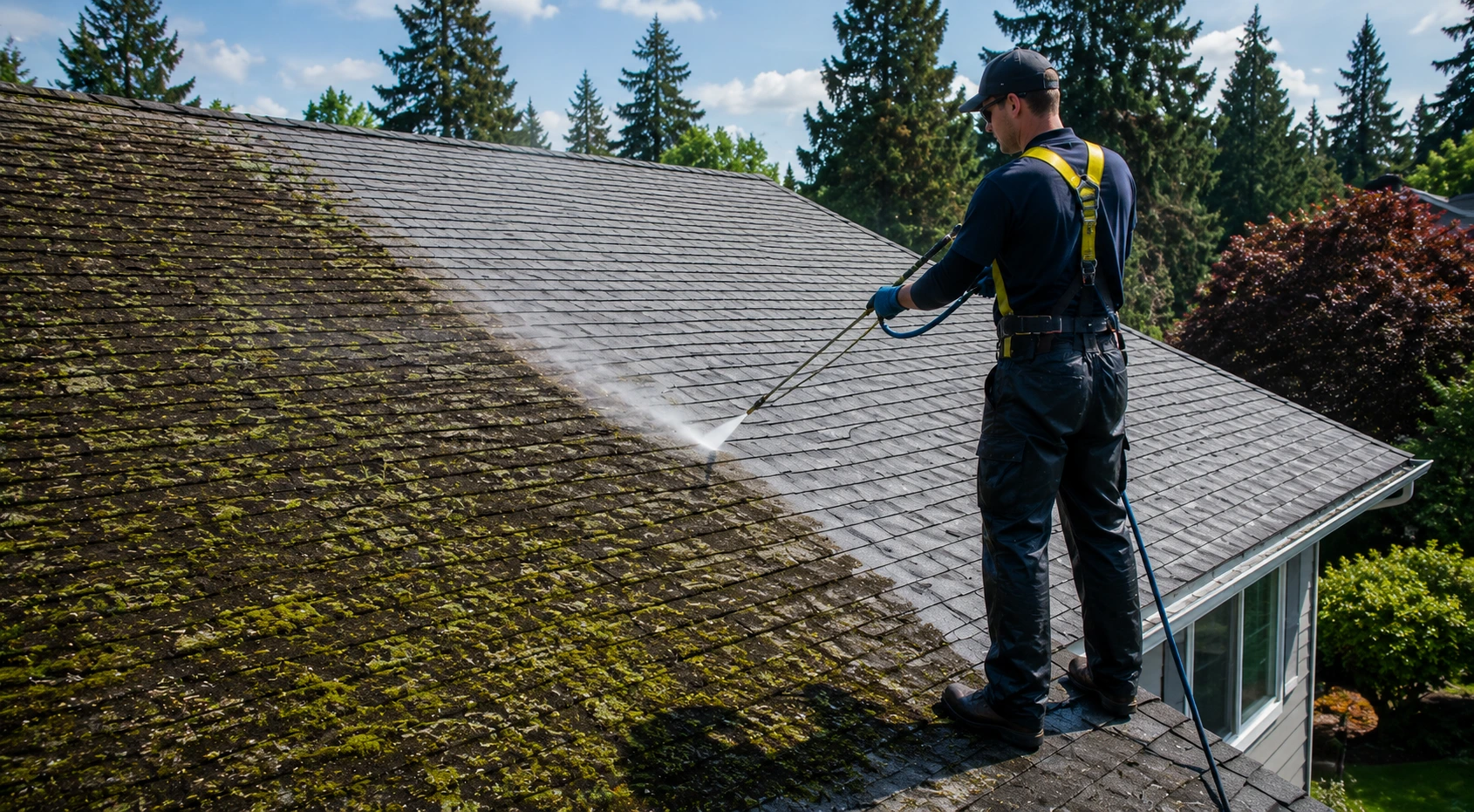
The soft washing method is a safe way to clean your roof, using low-pressure water and specialized cleaning solutions. These liquids are first sprayed over the roof to remove roof moss, algae, and mold from the roots so that they will not come back easily. After this, the roof is rinsed with low-pressure water to wash everything away. This method doesn’t damage the shingles as pressure washing does.
Vinegar and water spray
A vinegar-and-water mix is often used as a gentler DIY solution for small patches of algae, mold, or light roof mold cleaning. It can be sprayed on affected areas, left for a short period, then lightly scrubbed and rinsed with water. This method is useful for eco-conscious homeowners, but it usually works slowly and may require repeated applications for visible results.
Oxygen Bleach Cleaning
Oxygen bleach is a safer, gentler option for cleaning roof stains, algae, and moss. Mix it with water, apply it over the dirty area, then leave it for about 30 minutes, and then rinse it off with low-pressure water. This method is good if you have plants, painted surfaces, or sensitive areas near your roof. It’s best to protect plants and be careful while cleaning, because wet moss or algae can be very slippery.
Soft Bristle Cleaning
A soft brush helps remove algae and remove roof moss from a shingle roof. Always brush downward with the slope of the roof, not against it, to avoid damaging shingles or pushing water inside. Do not use hard brushes or scrape too much, as this can harm the roof surface. This method works best after the moss is treated and dried, not when it is still thick and stuck.
When Should You Call Roof Cleaning Professionals?
When growth is widespread
You should call roof cleaning professionals when algae, moss, or mold has spread across large areas of the roof instead of appearing as a few small patches. Minor growth may respond to DIY cleaning, but heavy moss or algae can become embedded in shingles, making it difficult to remove without damaging the roofing surface. Professionals use controlled soft-washing methods and roof repair solutions that target the growth more thoroughly than basic store-bought cleaners.
When the roof is unsafe
Call professionals if the roof is steep, multi-story, slippery, aging, or difficult to access safely. Algae, moss, and wet debris make roofing surfaces more hazardous, and a DIY attempt can create a serious fall risk. Professional roof cleaners understand basic roofing inspections & regulations; have safety equipment, proper ladders, and experience working on unstable or high surfaces, which makes them the safer choice when access is risky. For roof work, OSHA shares important safety tips to help prevent falls and injuries.
When moss has lifted shingles
Call professionals when moss has grown under the edges of shingles or tiles. At this stage, the issue is no longer just surface cleaning because moss can push roofing materials upward, allowing water to seep underneath. Clogged gutters’ dangers can make the problem worse by holding extra water, which can damage the roof. DIY brushing or scraping can also make it worse by breaking shingles, removing protective granules, or exposing weak spots that need inspection.
When growth appears near leaks
You should call a professional if algae, moss, or mold appears around chimneys, skylights, valleys, vents, flashing, or roof edges. Growth in these areas may indicate trapped moisture or poor water flow, and DIY cleaning will only remove the visible signs. A professional can check whether water is entering through damaged flashing, cracked sealant, blocked valleys, or weakened underlayment. So in these situations, you can call professionals for roof mold cleaning.
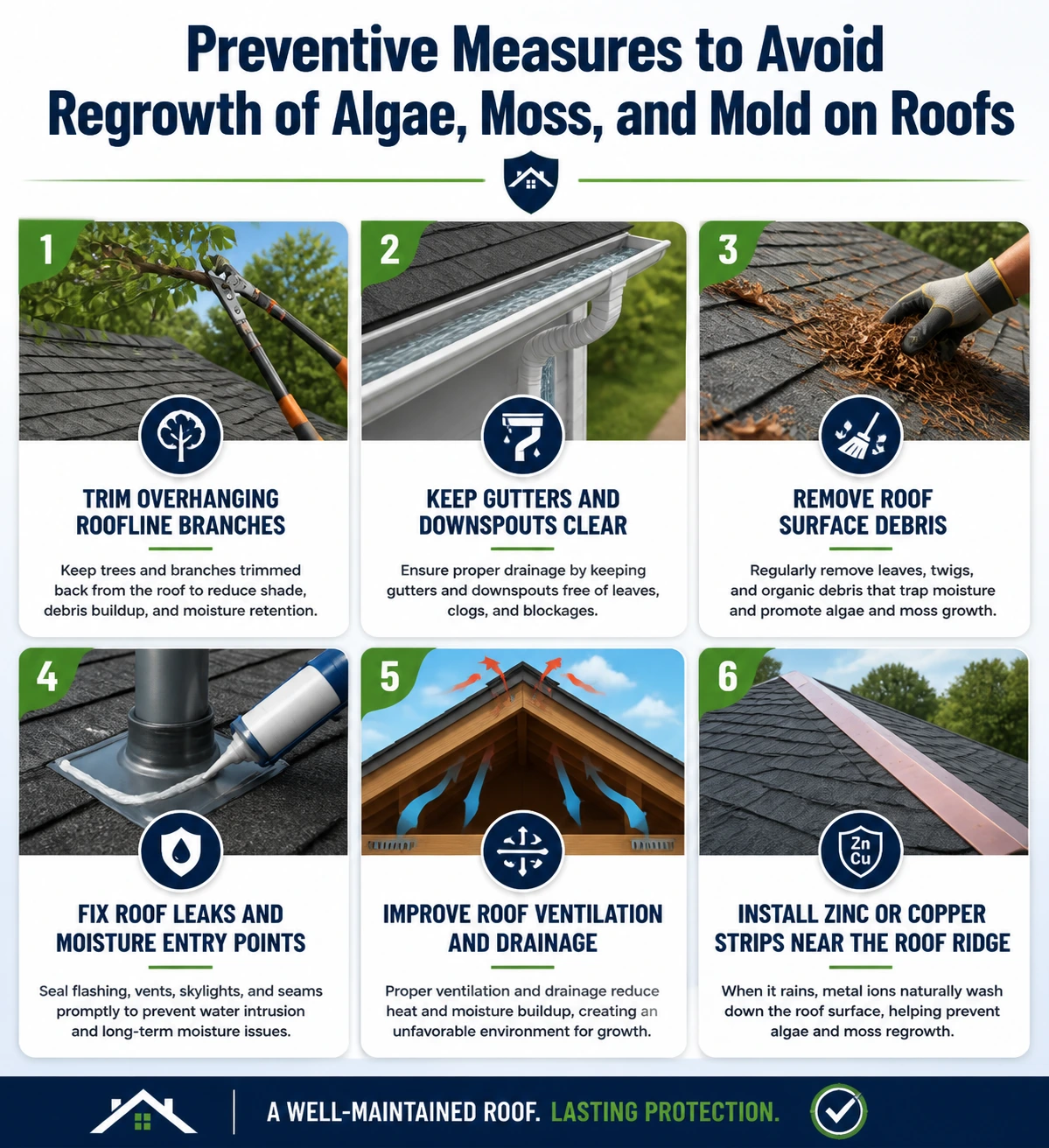
Preventive Measures to Avoid Regrowth of Algae, Moss, and Mold
A few simple maintenance steps can help stop algae, moss, and mold from coming back, keeping your surfaces clean and in good condition. According to the EPA, managing moisture around the home is one of the most effective ways to reduce future biological growth.
Conclusion
A clean and well-maintained roof helps prevent damage caused by algae, moss, and mold. While small problems can be managed easily, larger issues need professional care. TridentPro Constructions offers roof inspections, repairs, leak detection, storm damage restoration, and maintenance services to help keep your roof strong, safe, and protected for years.
Strengthen your home’s defense with TridentPro Construction, offering trusted roof care that keeps everything safe and secure year-round!
FAQ’s
Why do dark streaks keep coming back even after cleaning?
Professional cleaning removes algae spores from the root using specialized treatments, not just surface washing. Experts also apply protective solutions that slow regrowth and address moisture or shade conditions causing streaks.
Does the type or color of your roof affect how algae or moss grows?
Yes, roof material and texture affect growth; rough shingles trap moisture and debris, helping moss and algae spread. Dark roofs don’t grow more, but stains are harder to notice early.
Can roof growth impact the air inside your home?
Yes, sometimes it can. If moisture or mold from the roof reaches the attic, it can affect the air inside your home. This may cause a bad smell and make the air feel damp or unhealthy, especially if there is not enough ventilation.
What time of year is best for roof cleaning?
Dry seasons are best for roof cleaning because surfaces stay dry, cleaning solutions work more effectively, and there is less risk of slipping or moisture-related regrowth after treatment is applied.
How often should a roof be cleaned?
Most roofs should be cleaned every 1–2 years. However, homes in shaded, humid, or tree-covered areas may need yearly cleaning or regular inspection to prevent moss, algae, and mold buildup.