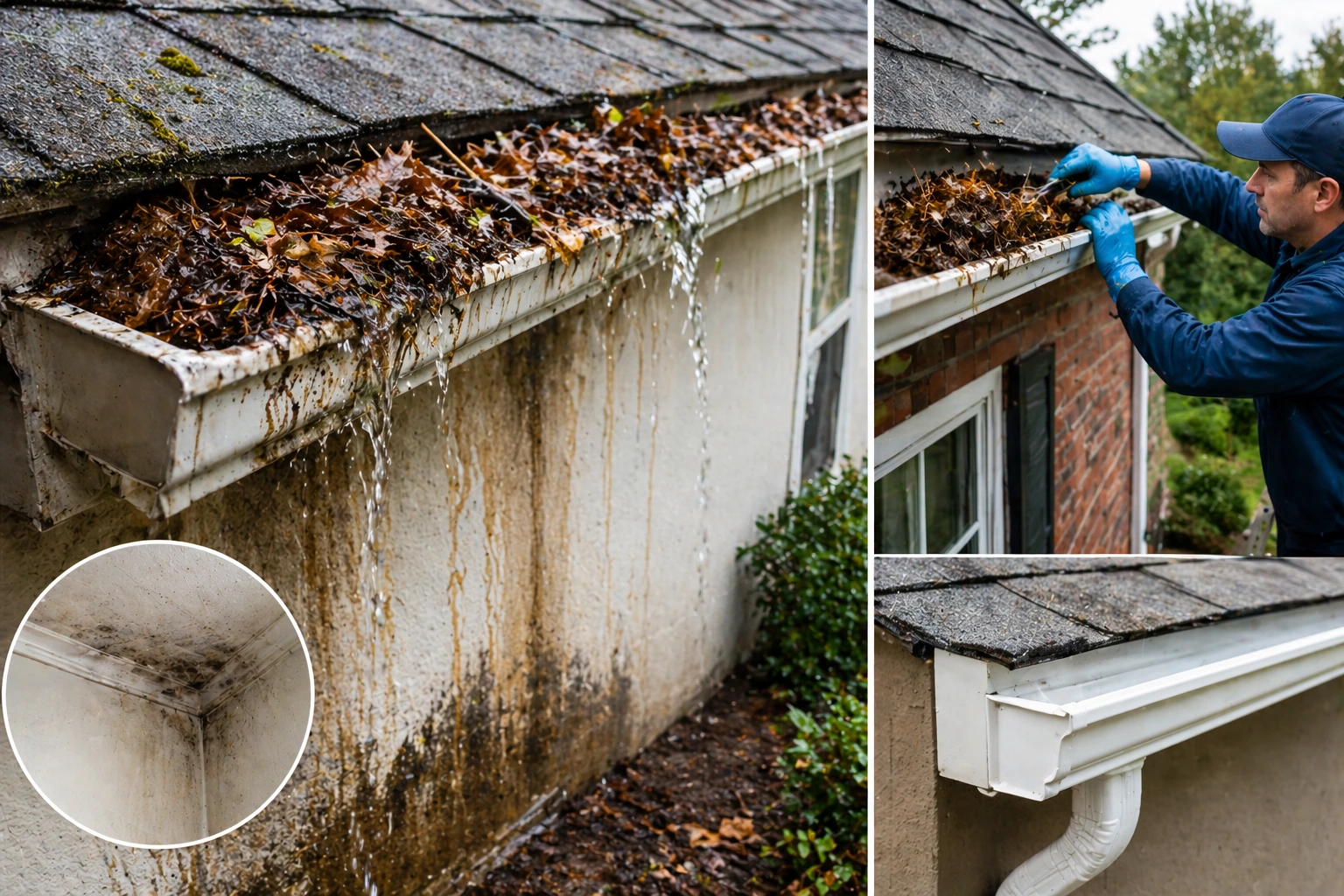
Gutter clogging might not seem like a significant problem in the house, but it can lead to severe and costly consequences without anyone noticing. Gutters are designed to direct rainwater away from your home to protect your roof, walls, foundation, and landscaping. Water will spill and flow into the unintended areas when the leaves, debris, and dirt build up. This can result in structural deterioration, mold growth, pest infestations, and even basement flooding. Hence, understanding these risks is important for every homeowner. In this blog, we will discuss in detail how clogged gutters affect your property and simple solutions to keep your gutters clean.
Clogged Gutters Risk and Prevention OverviewClogged gutters disrupt water flow, leading to roof infiltration, timber weakening, soil instability, microbial growth, and freeze-related stress. Early signs include irregular discharge, fascia changes, lingering moisture, structural distortion, unusual sounds, and joint strain. Preventive measures such as seasonal cleaning, gutter guards, downspout care, branch trimming, flushing, and inspections help ensure efficient drainage. Proper maintenance helps avoid costly repairs, protects structural integrity, and supports long-term roof performance and overall home durability. |
Major Dangers of Clogged Gutters
Roof Envelope Breach
When gutters are blocked, rainwater has nowhere to go and backs up along the roof edges instead of draining away. This backflow causes moisture to seep beneath the flashing and shingles, the roof’s primary protective layers. When water reaches these layers, it slowly soaks into the insulation. Such latent invasion will eventually render the roof incapable of keeping the structure dry and secure, and this is a clear indication of gutter issues affecting the roof that can arise from improper drainage.
Timber Element Degradation
On the outer side of the roof, we can find repeated dampening of the wood elements, fascia boards, and rafter tails due to surplus water. These parts are not supposed to constantly come into contact with water, and thus, they are gradually corroded by it and begin to weaken within their bodies. Repeated wetting and drying also cause wood to swell, crack, and loss of strength, further emphasizing the structural durability issues associated with long-term clogged gutter problems.
Soil Bearing Disruption
If the gutters are blocked, rainwater will not drain properly and will accumulate at the base of the building, leading to overflow. This focused runoff accumulates the soil surrounding the foundation, changing its natural density and compaction. As part of the broader dangers of clogged gutters, the soil becomes unevenly wet, shifting and settling unevenly. It can lead to slight underlying movement and minor cracks in the structure over time.
Moisture-Driven Microbial Growth
When water remains trapped in gutters, it creates persistent dark, wet conditions. These conditions are ideal for the growth of fungi, molds, and mildew. Once formed, these microorganisms may enter hidden areas, including cavities in walls, and, where proper attic ventilation is crucial. This not only destroys building materials but can also negatively affect indoor air quality.
Freeze-Induced Mechanical Stress
In colder climates, trapped gutter water freezes when temperatures drop. As water transforms into ice, it expands and exerts pressure on its surroundings. The expansion can bend gutters, lift roofing edges, and create cracks in surrounding materials. Repeated freezing and thawing of the system weakens it, increasing the likelihood of structural deformity.
Signs You Have Clogged Gutters
Clogged gutters often go unnoticed until they start causing visible damage to your home. Identifying the early warning signs can help you prevent costly repairs and maintain proper drainage.
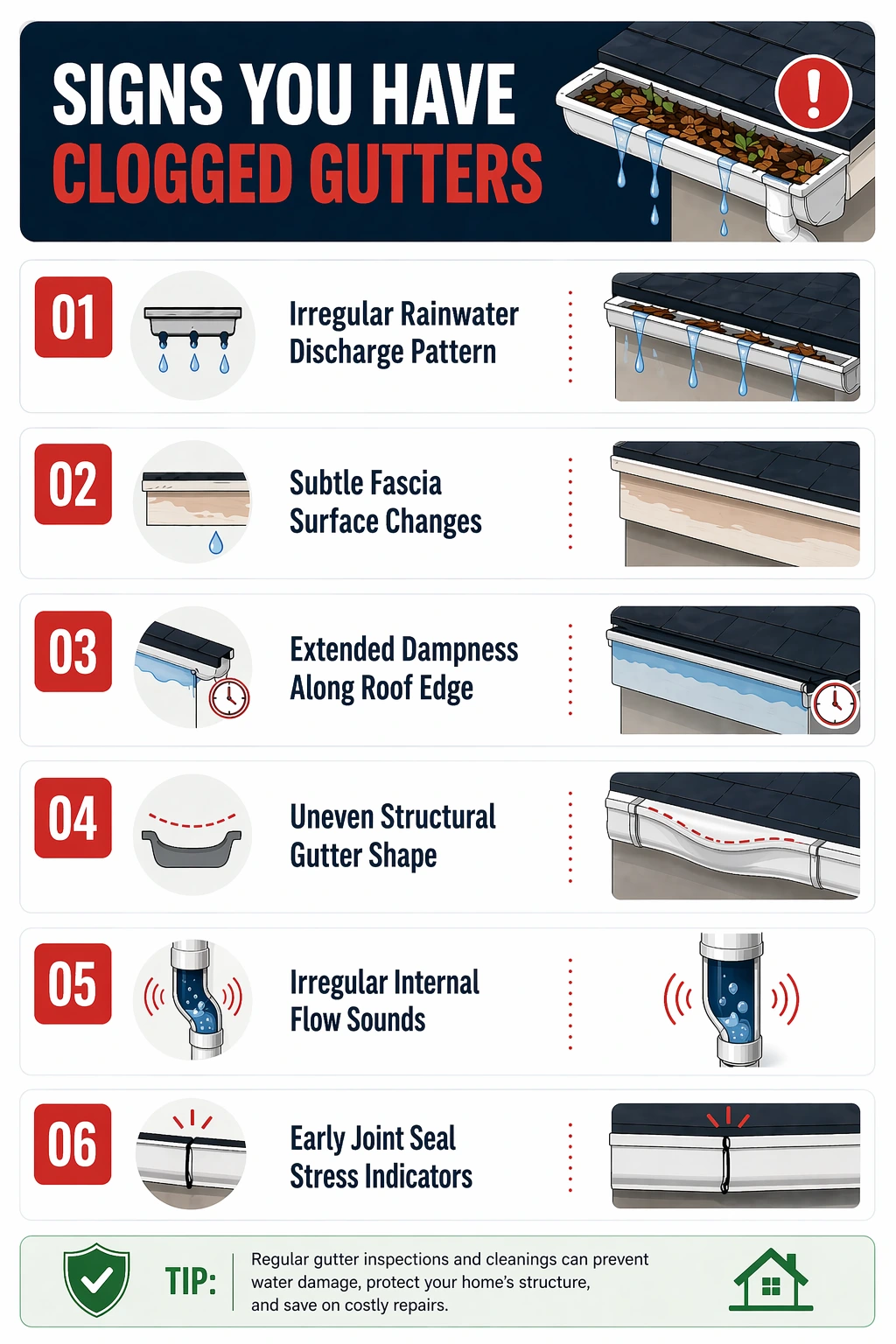
Irregular Rainwater Discharge Pattern
When it rains, the water does not flow in a single controlled direction toward the downspouts but instead exits at random points in the gutter. This occurs when the internal blockage cuts the intended flow path, causing the water to reroute unpredictably. This leads to uneven motion, indicating that the drainage channel is not operating consistently.
Subtle Fascia Surface Changes
The changes that may be observed in the fascia board at the initial stages include irregular coloration, light surface waviness, or slight damp spots despite the absence of an apparent overflow. This is caused by a minute flow of water moving in the opposite direction of the gutter and the edge of the roof. The impact is confined to the supporting edge of the wood, not far beyond.
Extended Dampness Along Roof Edge
The perimeter and gutter junction of the roof dry considerably more slowly than other parts of the roof after rainfall ceases. This occurs due to inefficient drainage through the gutter system, causing water to stagnate along the edge. The dampness remains trapped in the roof boundary zone.
Uneven Structural Gutter Shape
Some parts of the gutter begin to deviate from a straight line, showing minor curves or localized drooping. This is due to disproportionate internal weight distribution and trapping material that collects in certain places. The distortion occurs in discrete sections, not in the gutter length.
Irregular Internal Flow Sounds
During the flow of water, the downspout creates irregular sounds like bubbling here and there, brief bursts, or irregular gurgling. This is due to airflow being hindered in the pipe by partial obstruction. The sound pattern is not constant or unbroken but discontinuous.
Early Joint Seal Stress Indicators
There are early indications of stress in the closed bonding points between gutter sections, including small separation lines or weak bonds. This is caused by unequal internal pressure and trapped moisture, which only affects the joint areas. The effects are focused on the connection points, not on the entire structure.
How to Prevent Clogged Gutters
Regular Seasonal Cleaning
Gutters also need to be cleaned twice annually to eliminate leaves, dirt, and debris that obstruct the flow of water. This keeps the drainage channel open, allowing rainwater to flow freely. After heavy leaf fall or storms, seasonal cleaning is best.

Installing Gutter Guards
Gutter guards are placed over the gutter top, so only water will go through, while larger debris will be blocked. They operate by sieving out leaves and twigs before they enter the channel. This helps to build up less and makes gutters cleaner.
Proper Downspout Maintenance
Downspouts are to be regularly checked and flushed to ensure water flows freely. This eliminates invisible blockages that can impair or block drainage. The obvious downspout can ensure the rapid, smooth flow of water off the roof.
Trimming Nearby Tree Branches
Pruning out overhanging branches will lower the quantity of falling leaves and twigs in gutters. This curtails the primary source of debris accumulation near the roof. Gutters remain cleaner longer because less material is introduced into them.
Routine Water Flushing
Water flushing of gutters will help remove small particles that are not visible during cleaning. It also verifies the flow of water in the whole system. This will ensure there are no underwater slowdowns in drainage.
Professional Inspection Checks
Frequent examinations can help detect minor problems, including loose joints or premature obstructions, before they escalate. Professionals inspect the complete system to ensure everything functions properly and, in some cases, recommend gutter replacement during roof replacement for better long-term performance.
Conclusion
Clogged gutters may look like a small maintenance issue, but they can quietly lead to serious roofing, structural, and moisture problems if ignored for too long. By understanding the warning signs and following simple preventive care, homeowners can protect their property from costly damage and long-term repairs, since proper maintenance directly supports how roofing raises a home’s value over time. At TridentPro Construction, we help homeowners stay ahead of gutter-related roofing issues with reliable guidance on maintenance, replacement, and overall roof health, ensuring a safer and more durable home over time.
FAQs
How often should gutters be inspected?
The gutters should be checked at least twice a year, preferably before the monsoon and after the fall, to ensure they drain properly and have no hidden blockages.
Can clogged gutters affect indoor walls?
Yes, long-term water overflow can seep into wall cavities, leading to damp areas, peeling paint, and internal dampness in the house.
Do clogged gutters attract insects or pests?
Stagnant water and organic debris provide the perfect breeding grounds for mosquitoes, ants, and other pests that thrive in moist, undisturbed habitats.
Can heavy rainfall worsen gutter issues?
Yes, when the rains are heavy, the gutters that are partly blocked may overflow, exert more pressure, and accumulate debris at a higher rate than is already in the system.
Are certain seasons worse for gutter clogging?
Autumn is the most common due to falling leaves, but spring storms can also bring debris. Seasonal changes significantly impact how quickly gutters accumulate blockages.