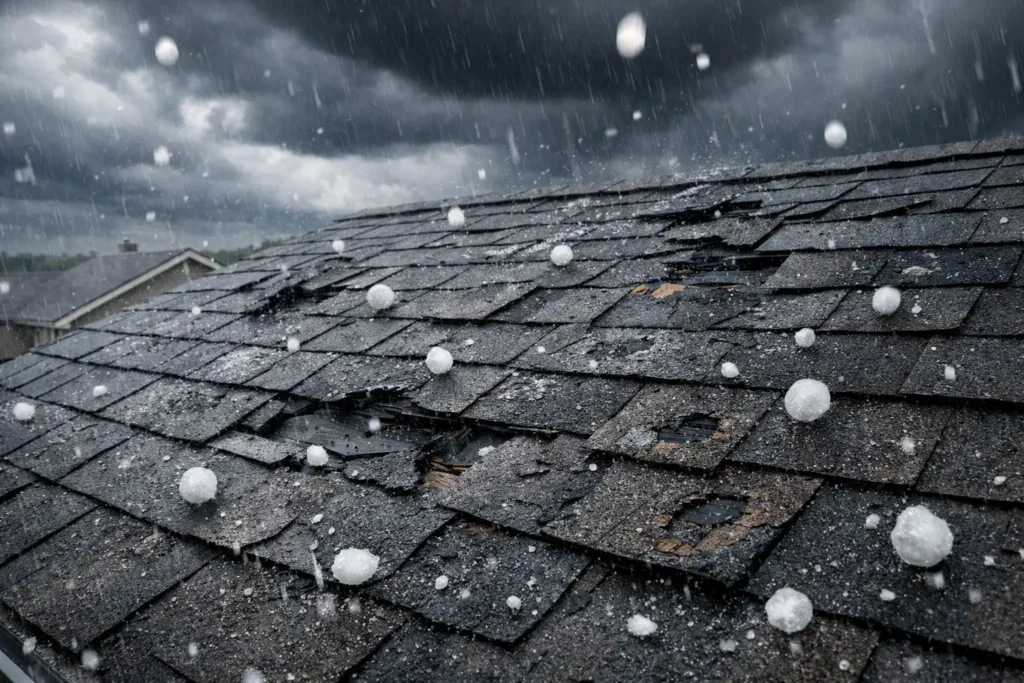
Hailstorms can be deceptively destructive, especially for asphalt shingle roofs. What may appear as a brief burst of ice from the sky can silently compromise your home’s first line of defense. Hail impacts can crack shingles, create small dents, and loosen the protective granules on the surface. This initial hail damage to asphalt roof shingles, if unnoticed, can quickly escalate into more serious problems, affecting the roof’s protective function and the home’s overall integrity. By identifying the warning signs early and understanding the available repair options, homeowners can take timely action to protect their property and extend the lifespan of their roof. Let’s explore in detail what lies beneath the surface after a hailstorm strikes an asphalt shingle roof.
Overview of Hail Damage to Asphalt Shingle RoofsHailstorms can cause both visible and hidden damage to asphalt shingle roofs, including cracked shingles, granule loss, and weakened underlayment. Early detection of warning signs and timely repairs are essential to protect home integrity. Professional inspection and restoration, like the services offered by TridentPro Construction, ensure durable repairs, prevent leaks, and maintain the roof’s long-term performance and resilience. |
Common Hail Damage and Its Impact on Asphalt Shingle Roofs
Granule Displacement and Loss
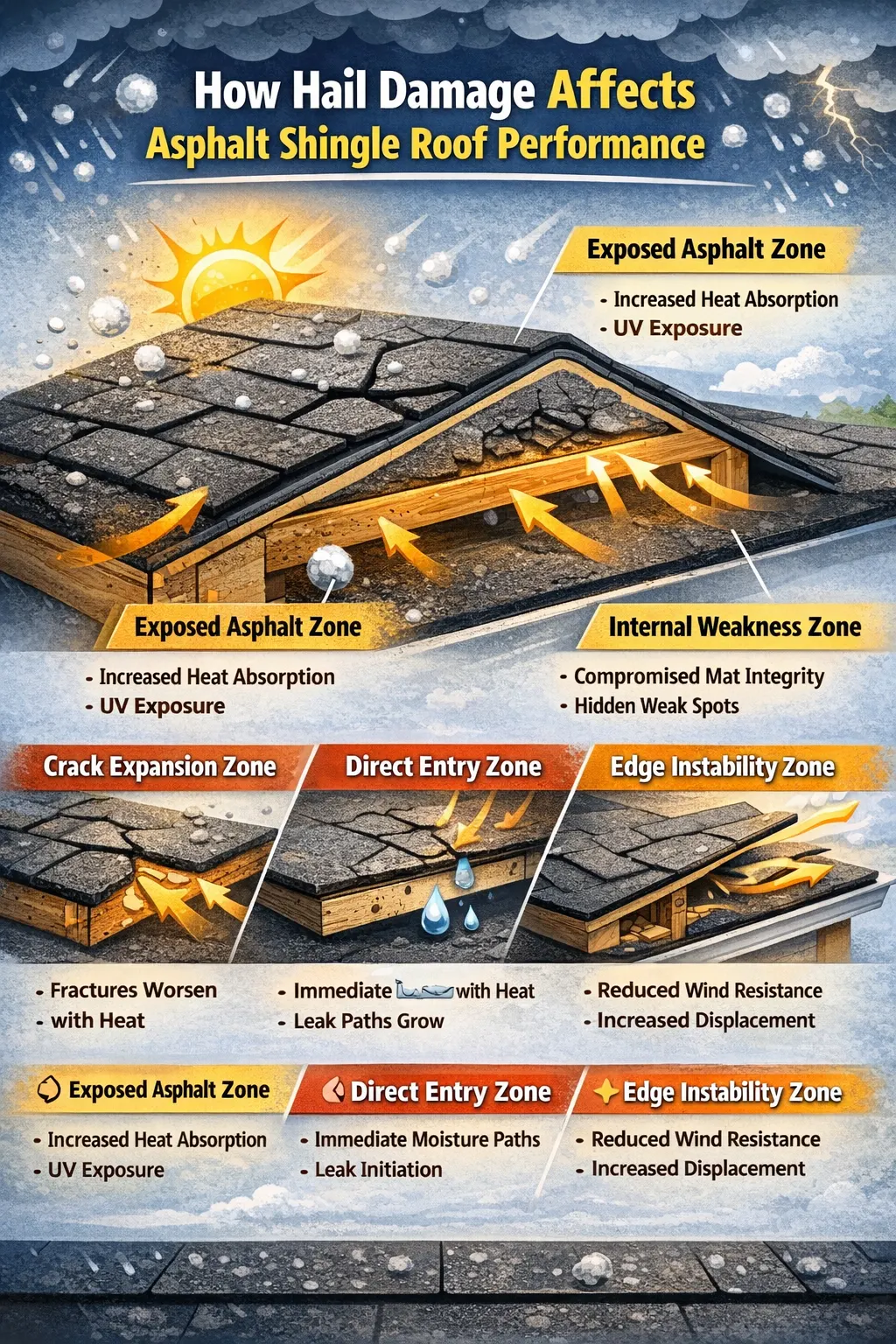
When hail removes protective granules, the asphalt layer is left exposed to direct sunlight and weather conditions. This increases heat absorption, accelerates drying and cracking, and reduces the shingle’s ability to repel water. Over time, granule loss shortens roof lifespan and makes shingles more susceptible to moisture intrusion and premature failure.
Impact Bruising
Impact bruising weakens the internal mat structure of the shingle, even when surface damage is not immediately visible. These compromised areas lose their rigidity, making shingles less effective at shedding water. As bruised sections deteriorate, they can develop leaks and contribute to uneven wear across the roof surface.
Surface Cracking and Fractures
Cracks caused by hail allow water to bypass the outer protective layers and reach the underlayment or roof deck, significantly increasing the risk of leaks, wood rot, and interior damage. Due to rising temperatures, this issue is considered one of the common roof problems in summer, as heat expansion worsens fractures and causes small cracks to spread rapidly.
Punctures and Depressions
Punctured shingles create direct pathways for water to enter the roofing system, leading to immediate leak risks. Depressions weaken the asphalt layer and trap moisture, increasing the likelihood of mold growth, material breakdown, and structural damage over time, especially during repeated weather exposure.
Seal Strip Failure and Edge Damage
Damage to seal strips and shingle edges reduces the roof’s wind resistance and overall stability. Lifted or misaligned shingles expose fasteners and underlayment, making the roof more vulnerable to water penetration during rain and wind-driven storms. This type of damage often leads to progressive deterioration if not addressed promptly.
Warning Signs of Hail Damage
Below are common indicators that may suggest a roof has been affected by hail.
- Bare or darkened areas on shingles where protective granules have been displaced, increasing exposure to sunlight and moisture.
- Irregular dents or impact marks are scattered across shingles, typically appearing in no consistent pattern.
- Soft or spongy spots are detected when gently pressing on shingles, indicating internal damage beneath the surface.
- Newly formed cracks or splits in shingles following a hail event, which can allow water to penetrate the roof system.
- Shingle edges that appear lifted, curled, or poorly sealed reduce the roof’s resistance to wind and rain.
- Unusual accumulation of granules in gutters or near downspouts, suggesting recent surface deterioration.
- Moisture-related signs, such as ceiling stains or damp attic insulation, may appear inside the home after the storm.
- Noticeable increase in indoor humidity or attic moisture levels linked to compromised roofing materials.
- Reports of hail-related roof inspections or repairs in nearby properties indicate storm conditions severe enough to damage roofs in the area.
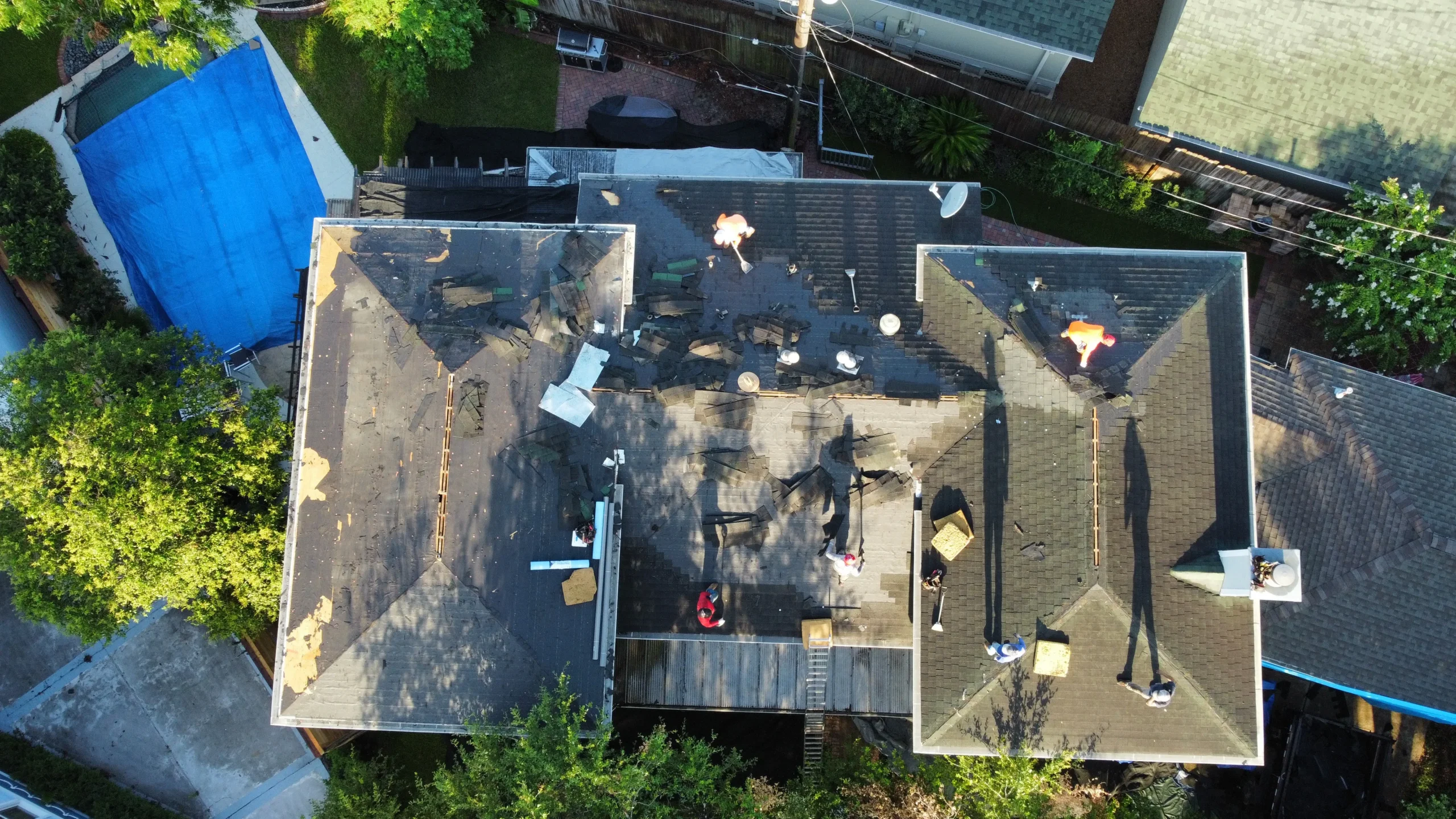
Repair Options for Hail-Damaged Asphalt Shingle Roofs
The appropriate repair method for asphalt shingle hail damage depends on the severity of the impact, the condition of the shingles, the roof’s age, ventilation performance, and local building code requirements.
Spot Shingle Replacement
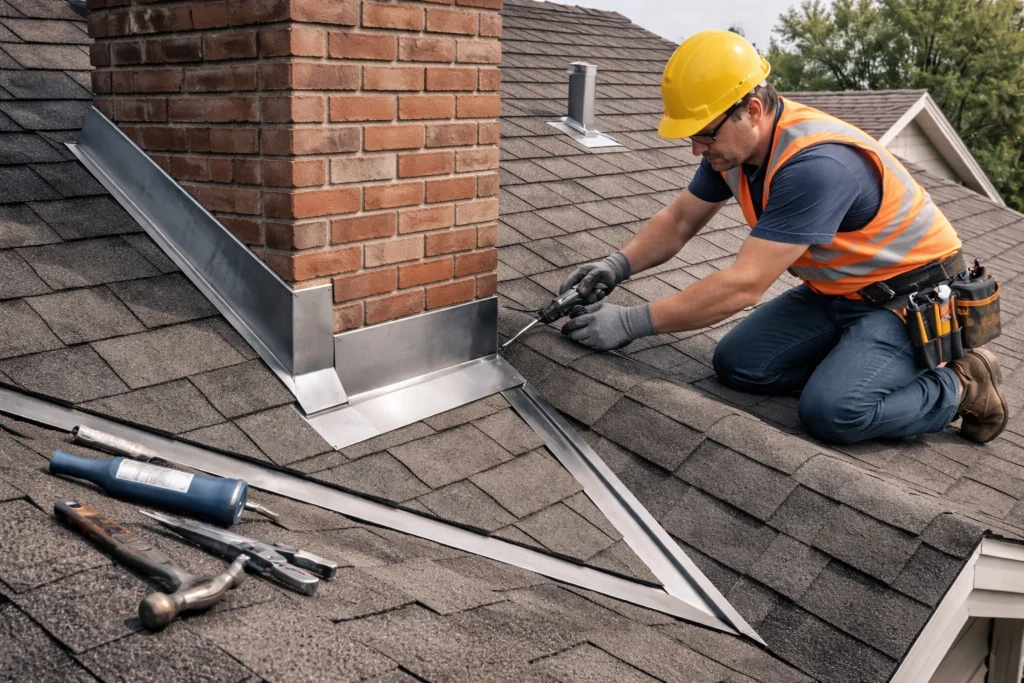
Localized hail damage that affects individual shingles can be corrected by removing compromised shingles and installing matching replacements. The process requires lifting adjacent shingles, removing fasteners with care, securing new shingles according to the manufacturer’s nailing guidelines, and restoring proper adhesion.
Partial Roof Section Repair
When hail damage concentrates on specific roof slopes, replacing an entire section provides uniform protection and consistent wear. This approach reduces water intrusion risks caused by uneven shingle performance and ensures compatibility between repaired areas and existing materials.
Seal Strip Reactivation or Replacement
Hail impact and wind pressure can break adhesive seals, which reduces resistance to uplift. In minor cases, approved roofing sealants can restore adhesion. Widespread seal failure requires shingle replacement to maintain wind performance and prevent future displacement.
Underlayment Repair or Reinforcement
Moisture intrusion caused by hail damage may compromise the underlayment beneath the shingles. Repairs often involve replacing saturated sections or reinforcing vulnerable areas to restore the roof’s secondary moisture barrier and protect the decking.
Protective Coating Application
In limited situations, specialized roof coatings can address minor surface wear and extend shingle service life. This option suits newer roofs with minimal structural damage and should not replace necessary shingle or underlayment repairs.
For more detailed guidance and tips, you can also read our blog What every homeowner should know before hail damaged roof repairing to better understand warning signs, repair options, and how to protect your roof from further damage.
Conclusion
When it comes to handling hail damage, the key is taking action quickly and having the right expertise on your side. A thorough inspection, careful assessment of damage, and precise repairs can restore your roof’s strength and prevent future problems. For homeowners in Houston, TridentPro Construction is a trusted partner. We specialize in storm damage repair and asphalt shingle roof repairs, applying hands-on experience to every project. We replace damaged shingles, reinforce underlayment, repair flashing, and address all roof accessories. To learn more or schedule an inspection, contact us at +1 832-880-6099.
FAQs
Can small hailstones still damage an asphalt shingle roof?
Yes, small hailstones can loosen granules, create bruises, and weaken shingles, especially if they are older or worn, potentially leading to future leaks or accelerated wear.
Can hail damage cause roof leaks immediately?
Not always. Minor hail may only bruise shingles, but cracks, punctures, or broken flashing can allow water to leak right away during rain.
Does hail damage affect roof warranties?
Yes, hail damage can impact warranties if repairs are delayed. Prompt professional repairs and proper documentation help maintain warranty and insurance coverage.