Most homeowners focus on shingles, but the real heavy lifting happens underneath. A high-performing roof relies on a solid base, which leads many to wonder, what is roof decking and why does it matter? Well, it is one of the most important of these hidden components, yet many homeowners only hear about it during an inspection, repair, or replacement. Since it can affect your roof’s strength, moisture resistance, and overall lifespan, understanding its role can help you make smarter roofing decisions. We’ve put together this guide to walk you through everything from material choices to spotting hidden damage, helping you make informed decisions for your next roofing project.
Comprehensive Roof Decking Maintenance OverviewRoof decking serves as the vital structural foundation supporting your home’s shingles and weight loads. Whether utilizing OSB, plywood, or specialized SIPs, maintaining this layer is essential to prevent sagging, rot, and collapse. By prioritizing attic ventilation, gutter care, and professional inspections, homeowners can detect early signs of moisture damage. Trusting expert evaluations ensures industry-standard installation and long-term structural integrity against the elements. |
What Is Roof Decking?
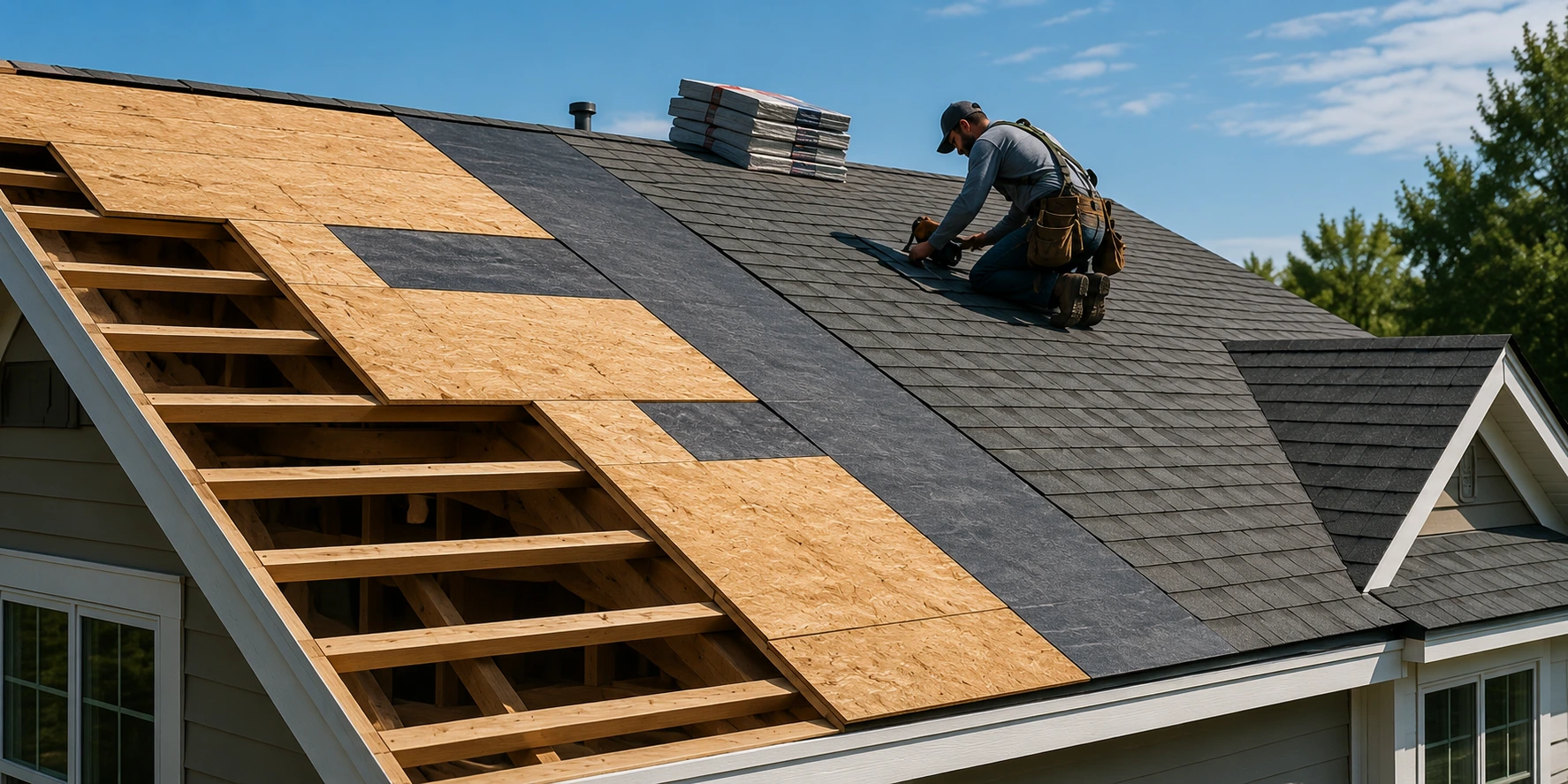
The continuous sheathing that creates the base for the shingles and other roofing materials is known as roof decking. It is designed to transmit dead loads, like roofing materials, and live loads, like snow, wind, and maintenance, to the building’s structural framework. With the roof being the foundation of the house, it is essential to know the importance of regular roof inspections and consistent maintenance, as sagging or rotting of the roof deck can result in a catastrophic collapse and can compromise the roofing system.
Types of Roof Decking Material
Here are some of the most widely used decking materials:
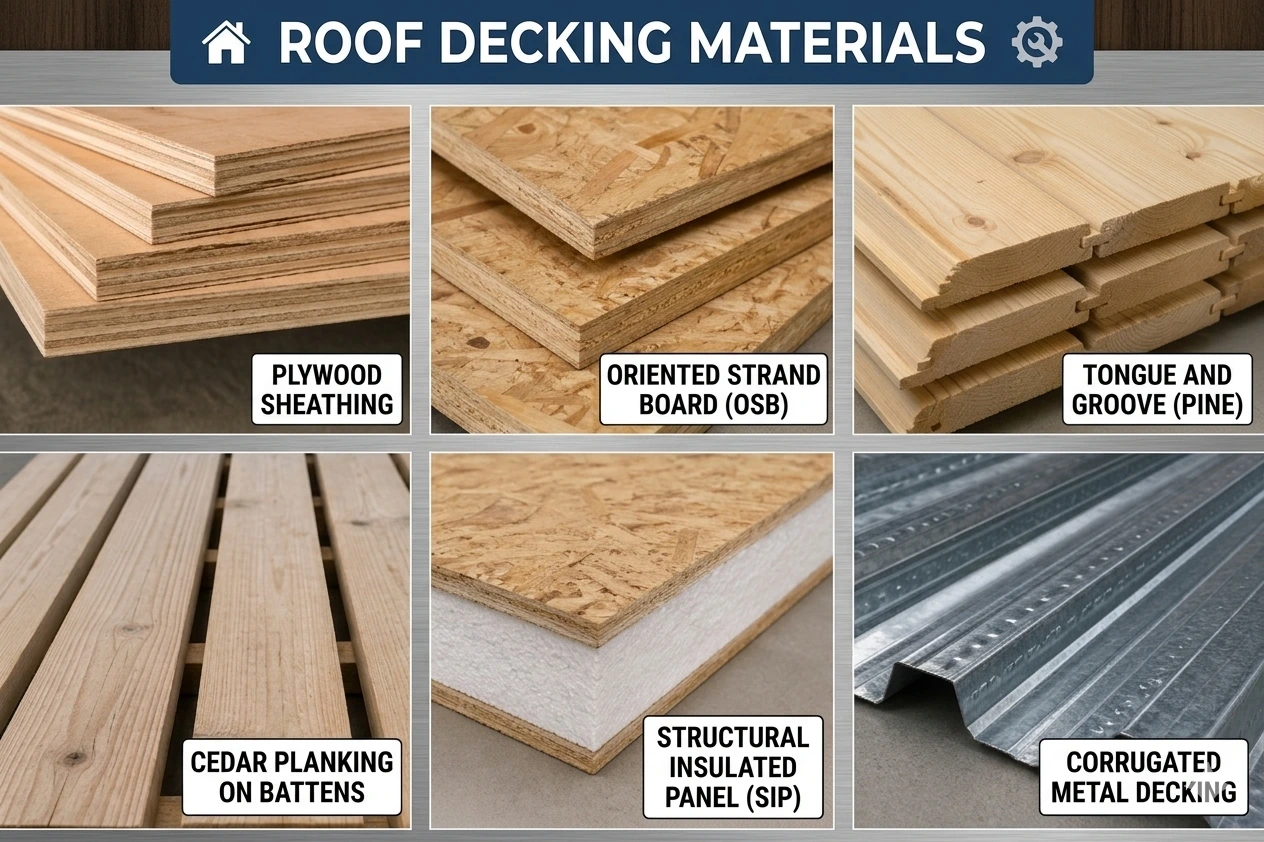
Plywood (CDX or Structural Grade)
Plywood is a long-time popular choice made by bonding wood veneers with a cross-grain pattern. It’s a durable material with excellent moisture protection and takes less time to dry. The high load-bearing and nail-holding strength make it the best available option.
Oriented Strand Board (OSB)
OSB is the go-to choice for modern homes, engineered by compressing wood strands with waterproof resins. This creates a panel with uniform strength and excellent shear resistance. Usually found in thicknesses from 7/16″ to 3/4″, it handles standard roof loads exceptionally. As the edges can be sensitive to moisture, the emphasis must be on high-quality underlayment and proper sealing to prevent any swelling.
Tongue and Groove (Solid Wood Planks)
If you are looking for classic stability, Tongue and Groove uses solid lumber boards that interlock for superior lateral strength. This setup creates a rigid, continuous surface that distributes weight evenly across your roof. You’ll often see this in older homes or exposed-ceiling designs. It has incredible holding power for nails, but these natural wood boards require ventilation to avoid warped or shrinking wood.
Plank Sheathing (Spaced Boards)
Spaced decking involves installing dimensional lumber with intentional gaps (typically 1/8″–1/2″) to promote airflow. This is a specialized technique primarily used under materials like wood shakes or slate, which need to breathe to prevent rot. Since it isn’t a solid surface, the roof load is distributed to each rafter. It’s a classic, functional approach for specific high-end materials that need a little more ventilation.
Structural Insulated Panels
Featuring a rigid foam core sandwiched between structural layers like OSB, SIP is a one-stop solution. They provide the structural support your roof needs while acting as a massive thermal envelope for your home. These panels offer incredible energy efficiency by reducing thermal bridging and increasing your R-value. These roofs have high load-bearing capacity and air-tight construction, but it requires attention to detail at the joints to control structural and moisture integrity.
Signs Your Roof Decking Needs Repair or Replacement
Here are the primary technical and visual signs that your decking requires professional attention for repair or roof replacement:
- Visible sagging or uneven ridges signal wood structural failure or rafter deterioration due to chronic moisture and excessive static loads.
- Soft, spongy, or bouncy areas on the roof indicate water infiltration, which breaks down wood fiber and weakens the roof.
- Water stains or discoloration in the attic confirm moisture infiltration and imminent wood deterioration, resulting in dark staining or mold growth.
- Hardware and shingle distortion cause warped decking, which causes nail loosening, misalignment, and improper shingle seating.
- Persistent roof leaks or ceiling damage indicate a compromised structural barrier where saturated decking can no longer shed water effectively.
Roof Decking Maintenance and Care Tips
Prioritize Attic Ventilation
By utilizing intake and exhaust vents, you stop your roof decking from baking in the heat, which preserves the structural integrity and prevents premature deterioration of the wood fibers.
Monitor Gutter Performance
Efficient gutters and downspouts are vital for directing runoff away from the roof edge when
- gutters clog
- water pools
- saturates the decking perimeter
This leads to moisture wicking, edge swelling, and rot. Thus, it is necessary to check runoffs consistently to maintain the stability and structural framing.
Ensure Proper Underlayment
As high-quality underlayment acts as a critical moisture barrier, it shields the wood deck from water infiltration. However, synthetic materials (polyethylene films, rubberized asphalt) or ice-water shields help keep the deck dry if the primary roofing layer fails.
Inspect Flashing and Roof Penetrations
It is essential to inspect roof flashing and penetrations regularly to ensure watertight sealing around vents, chimneys, and skylights. Damaged or loose flashing can cause leaks, water intrusion, and structural deterioration, so timely repair maintains roof integrity and prevents costly moisture-related damage.
Schedule Regular Professional Inspections
To identify hidden moisture damage and early-stage decking failure, it is essential to have routine professional inspections. For this, experts are needed to detect warped boards or rusted fasteners to ensure timely repairs and maintenance.
Professional care and high-quality roofing raise a home’s value by ensuring the building envelope is secure, efficient, and built to last.
Conclusion
Ultimately, your roof needs a strong foundation to be effective. Regular maintenance of minor issues such as leaks and attic ventilation ensures your decking remains sound and safe for years to come. If you ever feel your roof is starting to get a little “wavy” or you just want to have it checked out, consult Trident Pro Construction. Our expert follows best practice installation techniques and stresses the importance of correct H-clip use for load distribution. During each roof replacement or repair, we thoroughly assess the existing sheathing.
To make your roof tough and rigid, we are here to help you, so that you can be prepared for any weather.
FAQs
Do all roof decks require the same spacing during installation?
Spacing can vary based on the material type, thermal movement expectations, and structural design of the building, so each place requires different spacing.
Can roof decking be repaired without removing the entire roof?
It can be possible to repair if the damage is small and can be cut out and replaced, but if the damage is bigger, it requires full roof removal.
Can roof decking be upgraded to improve energy efficiency?
If you are upgrading your roof decking with an insulated or higher-performance panel, it helps to reduce heat transfer, resulting in an energy-efficient way.
Does roof decking affect how well shingles perform in storms?
Yes, weak or uneven decking can cause the shingles to lose adhesion, thus increasing the risk of wind uplift damage. So it’s better to give prior notice.
Can roof decking thickness vary even on the same house?
Yes, it’s common for older homes to have mixed thicknesses due to past repairs or partial replacements done at different times.
Is it possible to install new roofing over old decking without changing fastener type?
No, fastener length and type must align with your decking condition and material density to ensure proper grip.